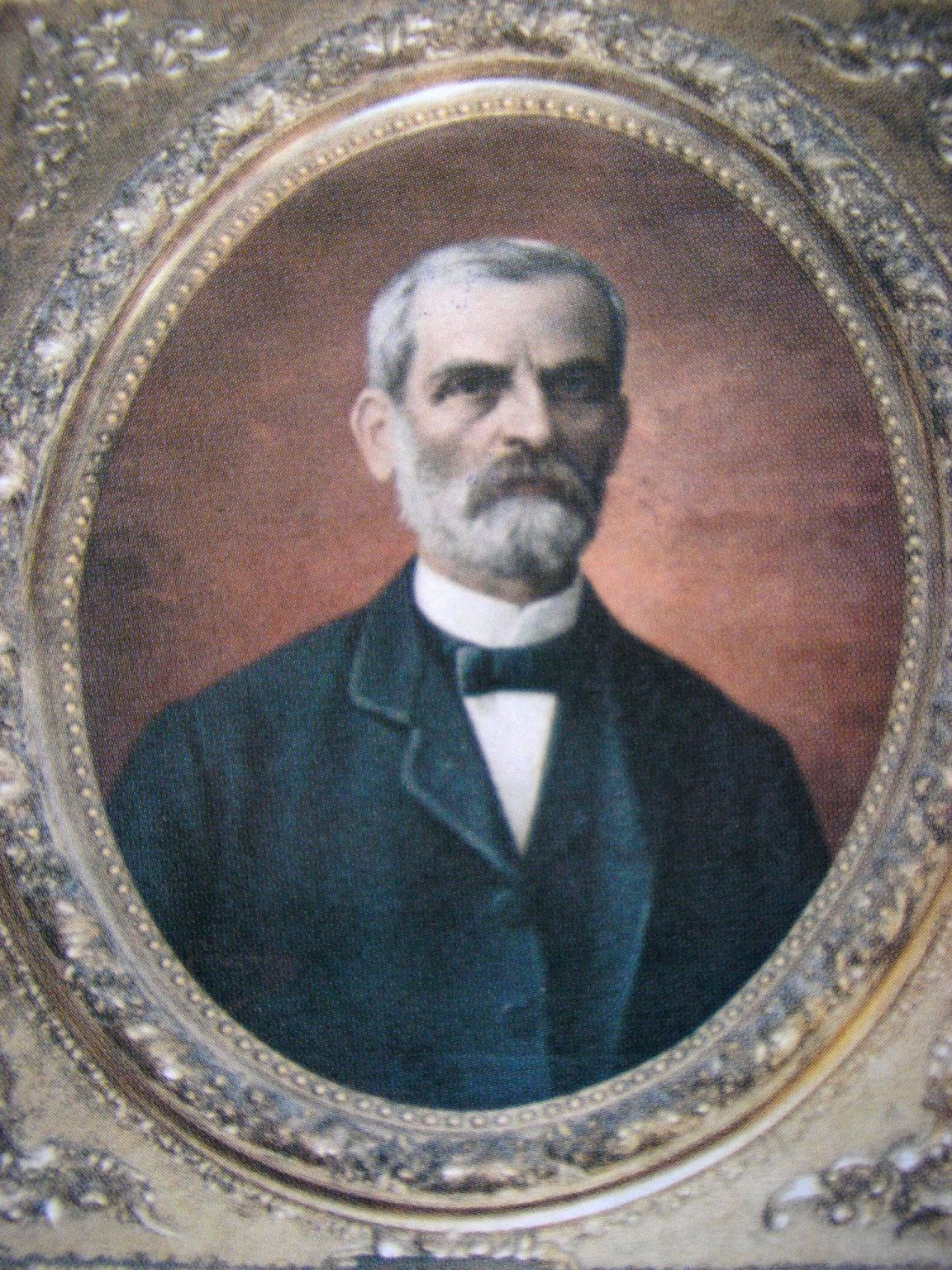
Iakovos Polylas: Editing Solomos into Print
Polylas worked inside Solomos’s intellectual and family circle. The Ionian University’s POLYSEMi biography records their long relationship. When Solomos died in 1857, Polylas delivered a funeral oration. From 1857 to 1862 he also served as librarian of the Public Library of Corfu.
The book made after Solomos
That proximity gave him access, responsibility, and influence. The volume he assembled was printed in Corfu by the Hermes press of Antonios Terzakis. Its title page survives in an exact institutional record from SearchCulture.gr and the National Documentation Centre. The record identifies the object as a title page, dates it to 1859, and places its production in Corfu.
Preservation required decisions
Solomos’s papers preserved alternative passages, cancellations, changes of order, and movement between Greek verse and Italian prose. An editor had to decide what belonged together, which state to print, and how much incompletion a reader would be allowed to see.
Polylas answered those questions by producing a readable corpus. In an Oxford University Press study of Solomos, Peter Mackridge describes the result as the transformation of the manuscripts into a coherent body of Greek national poetry. Polylas created that coherence through selection and arrangement.
A modern case study makes the mediation visible. In Textual Cultures, Evridiki Petridou and Katerina Tiktopoulou examine Solomos’s unfinished Funeral Ode II. Polylas’s 1859 edition presents it as three stanzas. The surviving drafts show that Solomos planned fifteen stanzas and worked substantially on six, drafting in Greek verse and Italian prose before abandoning the project.
The three-stanza poem preserves part of the ode in an editorial form imposed on a more fluid record.
Polylas’s selection and arrangement gave nineteenth-century readers a coherent printed text. Later genetic and digital editions expose alternative drafts and unfinished structures while documenting his editorial role. A different act of mediation is documented in Georgios Tertsetis’s recording of Kolokotronis.
Translation as a method of reading
Polylas’s editorial practice belonged to a wider engagement with language. Ionian University records his translations of Shakespeare’s The Tempest and Hamlet, as well as Homer’s Odyssey and Iliad. A dissertation in Greece’s National Archive of Doctoral Theses attributes to him the first modern Greek translations of The Tempest in 1855 and Hamlet in 1889. It places that work within the conflict between demotic Greek and katharevousa.
Translation and editing posed related problems. Both required judgment about how inherited language could speak to a present reader. Polylas balanced literary authority, readability and the formation of modern Greek. Lafcadio Hearn and Setsu Koizumi provide another account of how stories cross languages.
An Ionian intellectual in public life
His work was also political. POLYSEMi records his role in the campaign for the Union of the Ionian Islands with Greece, his newspapers, and his later service as a member of parliament for Corfu. The record shows literary and political activity continuing in parallel.
The arguments around Solomos extended into print. In 1860 Polylas published Πόθεν η μυστικοφοβία του κ. Σπ. Ζαμπέλιου;, a work catalogued by the Centre for the Greek Language under the criticism and interpretation of both Solomos and Spyridon Zambelios. The document places Polylas inside an Ionian dispute about how poetry, religion, history, and national culture should be read.
The edition as an object
The 1859 title page remains spare: author, title, patron, city, printer, year. Behind it lies the more complicated object Polylas constructed from Solomos’s papers. The volume gave later readers a poet they could encounter in print. It also left later editors a set of decisions to test against the manuscripts.
Extended Read
For the other side of this Ionian critical conversation, read Zambelios and the Bridge to Byzantium. The Lefkadian historian was the named subject of Polylas’s 1860 essay on the interpretation of Solomos.
Related reading: Dionysios Solomos: The beauty of the unfinished poem; Ioulios Typaldos: A poet and judge in the Solomos circle; Lorentzos Mavilis: Remembering the dead in fourteen lines.
For other Greek literary portraits, read Grigorios Xenopoulos: Bringing the Zakynthian spirit to Athens and Nikos Kavvadias: The Working Language of the Sea.
Further Reading
- Iakovos Polylas at Project Gutenberg, including public-domain editions of his Shakespeare and Homer translations.
- Dionysios Solomos: A Life in Translation, Peter Mackridge, Oxford University Press.
- The Ephemeris, Othisis’s dated cultural record.
References
- Ionian University, POLYSEMi, Iakovos Polylas biography and chronology.
- National Documentation Centre and SearchCulture.gr, Dionysios Solomos, Ta Evriskomena, title-page record.
- University of Crete, Anemi Digital Library, Dionysios Solomos, Ta Evriskomena, 1859 edition record.
- Evridiki Petridou and Katerina Tiktopoulou, “Reaching Out to the Reader: The Digital Genetic Edition of Solomos’s Funeral Ode II,” Textual Cultures 15.1 (2022).
- Centre for the Greek Language, Polylas bibliographic authority and work records.
- Greek National Archive of Doctoral Theses, study of Polylas’s Greek translation of Hamlet.
More from the journal
Air, Water and Place in the Hippocratic Corpus
What On Airs, Waters, Places actually argues
Ioannis Kapodistrias: The first Governor and the birth of the Greek state
Lafcadio Hearn: From Lefkada to Japan, with Setsu Koizumi
How journalism, naturalisation, retelling and Setsu Koizumi complicate a familiar international biography