Lorentzos Mavilis: Remembering the dead in fourteen lines
In Lorentzos Mavilis’s sonnet “Lethe”, the dead go to a spring to drink and forget. A tear shed by someone who loves them clouds the water. If they drink it, their old pain returns. The poem ends by turning towards the living, who cannot escape their memories.
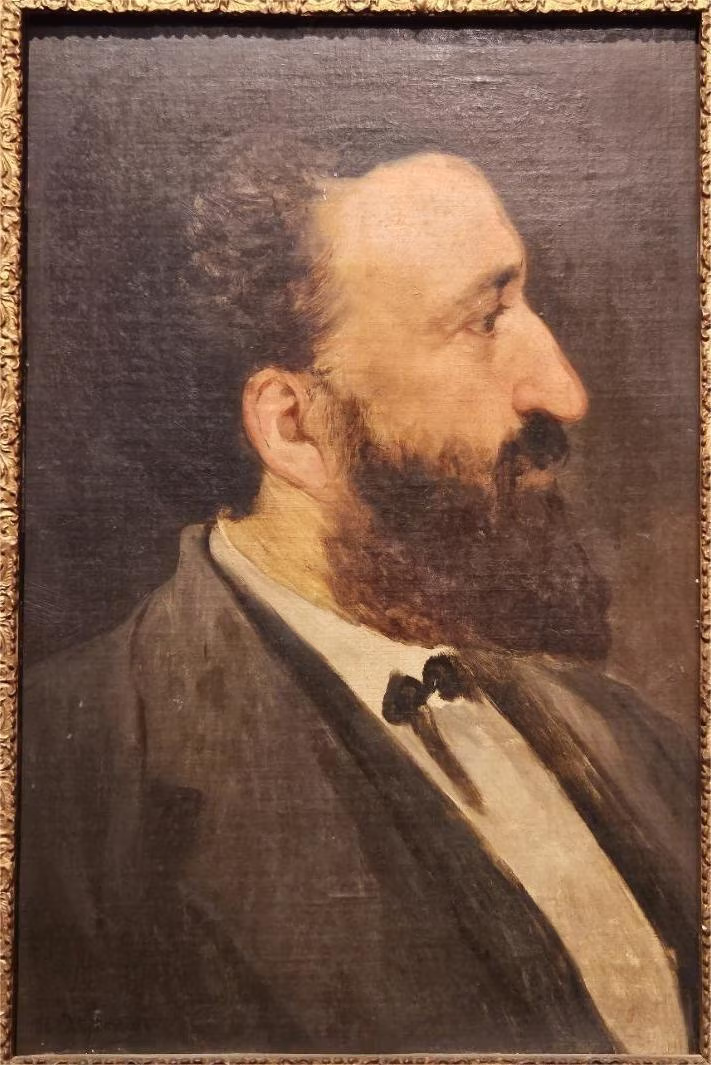
Portrait of Lorentzos Mavilis by Polychronis Lembesis, Municipal Gallery of Corfu. Photograph by GualdimG, via Wikimedia Commons. Source record. CC BY-SA 4.0.
The sonnet
“Lethe” was published in 1899. Its fourteen lines form two four-line stanzas followed by two three-line stanzas. The early claim that the dead are fortunate becomes harder to accept once the poem describes their thirst and the tears that disturb them.
The action is small: a drink interrupted by a drop of water. Mavilis does not need to name a particular bereavement. The living cannot forget, and their tears can make the dead remember. Foscolo’s A Zacinto also turns on burial and the loss of home.
Corfu, Germany and parliament
Born in Ithaca in 1860, Mavilis grew up in Corfu and knew Iakovos Polylas and other writers associated with Solomos. He spent years studying in Germany before returning to Corfu in 1890. The ERT documentary on his life follows his studies, poetry and political activity.
Elected to parliament for Corfu in 1910, he defended demotic Greek during the constitutional language debate of 1911. He had already served as a volunteer in Crete in 1896 and in the war of 1897.
During the First Balkan War, Mavilis joined the Garibaldini volunteers in Epirus. He was killed at Driskos, near Ioannina, in 1912.
Further reading
- Lorentzos Mavilis, “Lethe”, official secondary-school textbook.
- ERT Archive, Epochs and Writers: Lorentzos Mavilis, 1999; documentary catalogue and timed synopsis.