Ioannis Kapodistrias: The first Governor and the birth of the Greek state
Ioannis Kapodistrias arrived in Greece in January 1828 to lead a nation still fighting for its existence. The National Assembly had elected him in 1827. Britain, France and Russia formally recognised Greek independence in 1830.
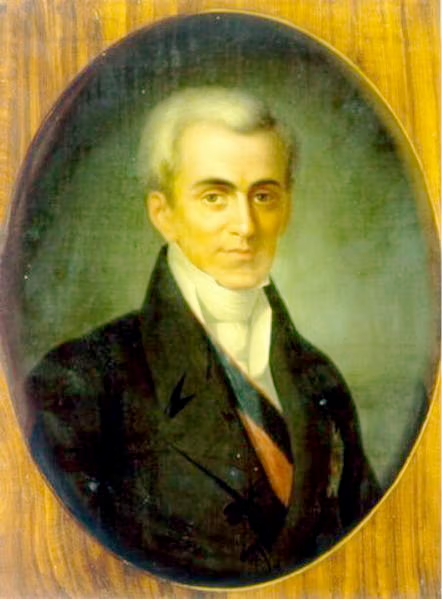
Portrait of Ioannis Kapodistrias attributed to Dionysios Tsokos, nineteenth century. Via Wikimedia Commons. Source record. Public domain.
From Corfu to the heart of Europe
Born in Corfu in 1776, Kapodistrias was a physician by training who rose through the ranks of the Septinsular Republic before becoming a key figure in Russian diplomacy. He played a vital role in the settlement of Europe after the Napoleonic wars, eventually serving as joint foreign minister under Alexander I. The Capodistrias Museum details his transition from high diplomacy to the raw challenges of a revolutionary administration.
In 1822, Kapodistrias withdrew from active Russian service after disagreeing with Alexander I over the Greek cause. He settled in Geneva and formally left Russian service in 1827.
Foundations of a new society
Kapodistrias focused on the immediate needs of the people. In 1829, he opened the Aegina orphanage for children displaced by the war. His government also established elementary schools and introduced the phoenix, the first currency of the modern Greek state. The coin, featuring a bird rising from flames, symbolized a nation attempting to rebuild itself from the ground up.
These initiatives were part of a broader effort to organize a legal system, a public administration, and a disciplined military, all while the country’s international status remained a subject of negotiation in London.
The struggle for authority
His belief in a strong, centralized government put him at odds with local leaders who resisted his authority. Kapodistrias argued that Greece was not yet ready for a full constitutional government given the chaos of the time, a position opposed by supporters of constitutional rule.
This tension culminated in the imprisonment of Petrobey Mavromichalis and the subsequent assassination of Kapodistrias in 1831 outside the church of Agios Spyridon in Nafplio.
Further reading
- Capodistrias Museum, Timeline: election, orphanage, recognition of independence and assassination.
- Capodistrias Museum, A short biography.