Ugo Foscolo: Zakynthos in a poem of exile
Ugo Foscolo opens “A Zacinto” by saying he will never again touch the shores where he lay as a child. The island is Zakynthos, where he was born in 1778. In fourteen lines, a childhood home becomes a place he can address in verse but cannot reach.
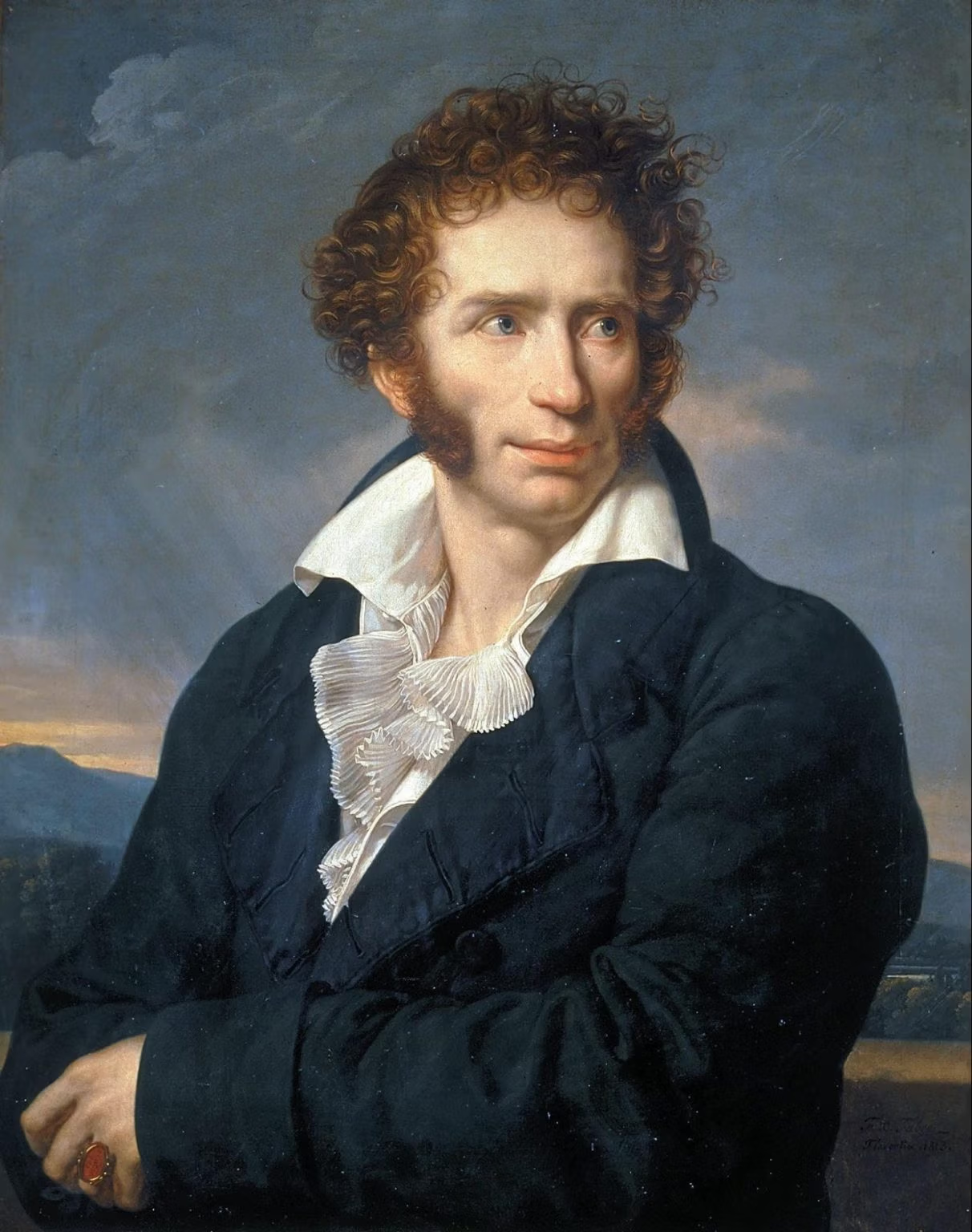
Ugo Foscolo, painted by François-Xavier Fabre in 1813. National Central Library of Florence. Via Wikimedia Commons. Source record. Public domain.
A Greek island and an Italian education
Foscolo’s mother, Diamantina Spathis, was Greek; his father, Andrea, was Venetian. Zakynthos was then under Venetian rule. After his father’s death, the family settled in Venice, where Foscolo began the literary and political career described in Treccani’s biography. His baptismal name was Niccolò; he later adopted Ugo.
In 1797 he wrote an ode welcoming Napoleon as a liberator. The Treaty of Campo Formio disappointed those hopes, and Foscolo left Venice for Milan. His subsequent life included military service, journalism, translations and repeated revisions of the novel Ultime lettere di Jacopo Ortis.
Odysseus returns; the poet does not
Written in 1802–1803, “A Zacinto” brings Homer and Odysseus into its account of the island. Odysseus survives his wanderings and kisses the rocky shore of Ithaca. The speaker expects a different end: burial away from home, without the tears of those who belong to him.
Zakynthos will receive his song. The poem makes that substitution painful because its opening has already named what is missing: the physical act of touching the shore again.
Burial abroad
Foscolo died near London in 1827 and was buried in Chiswick. In 1871, his remains were transferred to Santa Croce in Florence. The poet who had written about a grave far from home was eventually brought back to Italy, but not to the island addressed in “A Zacinto”.
Further reading
- Ugo Foscolo, “A Zacinto”, text and commentary edited by Gigi Cavalli, Treccani.
- Treccani, Ugo Foscolo: biography and works.