Heritage at Risk in Lefkada: Traditional Buildings and Karsaniki Embroidery
“Η μετάδοση στις νέες γενιές γίνεται με βιωματικό τρόπο, από μητέρα σε κόρη.”
National Inventory dossier for Karsaniki embroidery, August 2018
Heritage risk in Lefkada has more than one form. A traditional building remains exposed to earthquakes, material decay, alteration and uneven maintenance. Karsaniki embroidery depends on practitioners, transmission and enough economic reason to continue the work. A record identifies what exists, who holds the knowledge, what condition it is in and what intervention still needs to happen.
Here, “heritage at risk” means documented vulnerability and transmission pressure. It is not a safety classification for every older building or a prediction that Karsaniki embroidery is about to disappear. The evidence identifies where assessment, maintenance, teaching and economic work remain necessary.
Risk begins with a specific subject
A building faces structural and material conditions. A craft practice faces continuity through people, teaching and work. Structural assessment examines a particular building, its ground conditions, construction, alterations and maintenance. A craft record examines the practitioner, materials, sequence of work, teaching route, market and consent to document it.
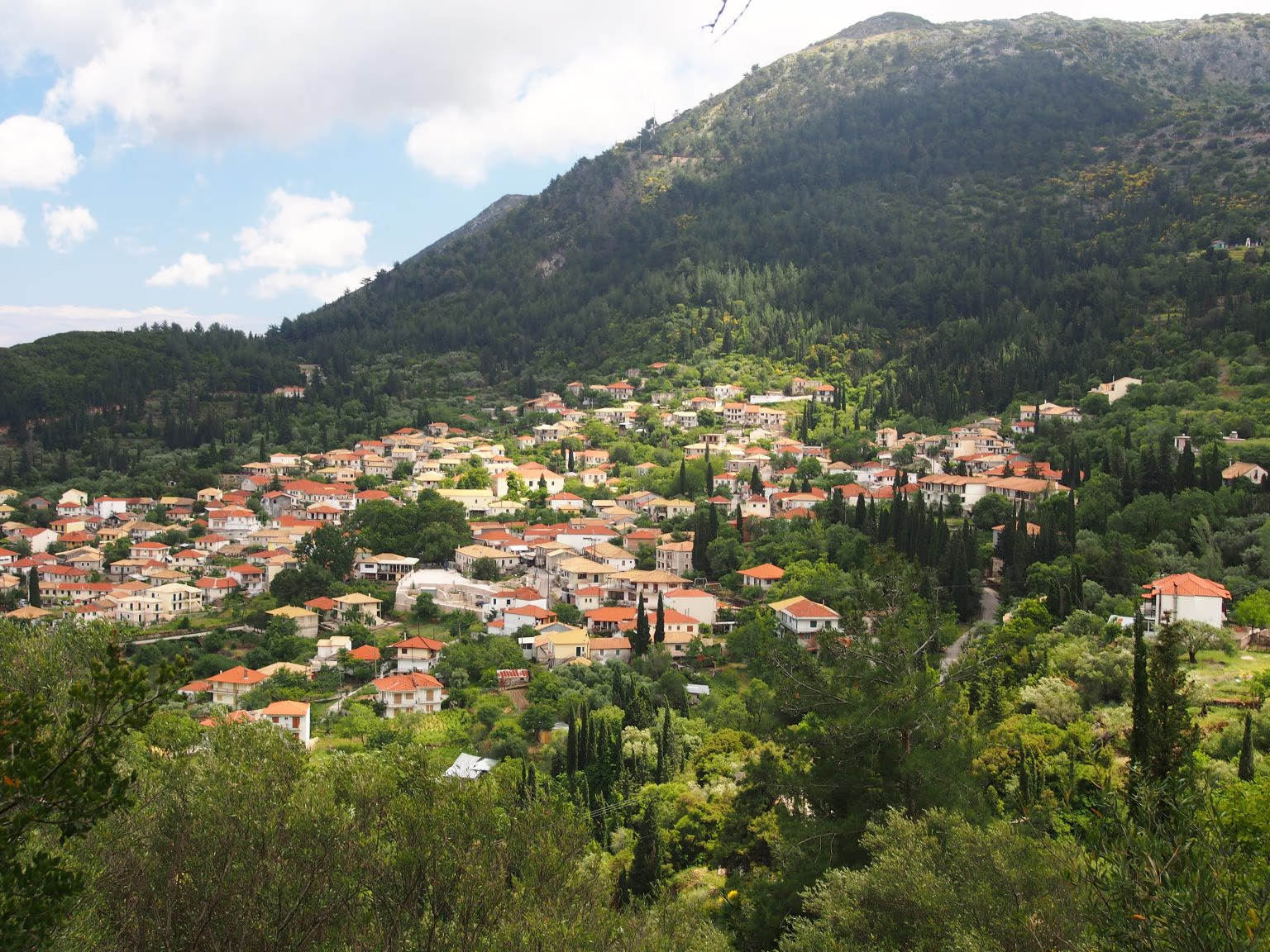
A general photograph of an old street or a finished textile can support identification. Assessment then requires a defined subject and method. Useful recording starts by naming the object, location, practitioner or construction system and by stating when the observation was made.
Lefkada’s traditional buildings perform well for identifiable reasons
Engineering studies of Lefkada Town describe a traditional dual load-bearing system. Stone masonry at ground level forms one system. A multistorey timber frame placed within the masonry forms another. The arrangement developed through local construction practice in an earthquake-prone setting and was later addressed by building rules introduced under British administration.
After the earthquake of 14 August 2003, researchers examined observed damage and modelled representative buildings. The published analysis found that the traditional system had significant seismic resistance. The finding applies to particular structural types, material conditions and load paths. An individual building still requires its own assessment.
Building-level work remains necessary. Dimitra Kalantoni’s doctoral research combined structural vulnerability, ground conditions and site effects for individual buildings in the old town. Its scenarios found generally satisfactory behaviour under an event similar to the 2003 earthquake and susceptibility to serious damage in a stronger scenario. A separate study of the 2003 event recorded limited serious structural damage overall, but it also documented local failures, damage to churches and the influence of age and maintenance.
Research on maintained traditional buildings adds a practical point: buildings retaining the system and receiving adequate maintenance showed stronger resistance and lower damage in the events examined. Preservation therefore involves condition, repair and compatible intervention alongside understanding the original design.
What a façade record can establish
A photograph can record the setting of a building tradition or a visible façade detail. It cannot establish a concealed frame, connections, later alterations, masonry condition or the ground beneath a particular building. Those require a defined subject and direct examination.
A useful building record should therefore include:
- an exact identity and location at a level appropriate to ownership and safety;
- the date, author and purpose of the record;
- the observed construction type, with concealed features clearly marked as unverified;
- condition, visible damage and later alterations, described without diagnosing from a photograph;
- drawings, measurements and images tied to the same building and date;
- the source of historical claims and any earlier survey;
- access, copyright, privacy and reuse conditions;
- the professional review or maintenance action that remains required.
This kind of record supports comparison over time. It can show that an opening changed, a cladding detail was replaced or a crack appeared after a known event. A public safety conclusion requires qualified inspection.
Karsaniki embroidery faces a transmission problem
Karsaniki embroidery was entered in Greece’s National Inventory of Intangible Cultural Heritage in 2019. The dossier identifies Karya, names Maria Stavraka, known as Koutsochero, in the technique’s history, and describes work made with a sewing needle and silk or cotton thread. It also identifies the practitioners themselves as the people who safeguard the practice.
The dossier was written in August 2018. At that time, it reported approximately 35 embroiderers active in Karya, most of them older, and approximately 20 professional embroiderers elsewhere on the island. It described transmission from mother to daughter and said the outlook was unfavourable because younger interest was declining and there was little economic incentive to take up the work professionally.
Those numbers are a dated snapshot from August 2018. Their value is that they identify a measurable problem: age, succession and income affect whether knowledge continues to be practised. A current practitioner count would require new fieldwork.
Current activity should be recorded as activity
Work on textile heritage is continuing. In July 2026, the Interreg Greece–Italy programme reported a HERITAGETEX event hosted by the Chamber of Lefkada. The project connects textile businesses, craftspeople, chambers, municipalities, education and policy. Its planned work includes mapping value chains and traditional production techniques, training, digital tools, circular-economy methods and cross-border exchange. The October 2026 Stamos hall report follows textile, plaster and paper into two artists’ work.
A project announcement establishes that an organised intervention exists. Counts of newly trained practitioners, changes in household transmission and income effects require later results with a date, method and defined population.
A craft record must keep the practitioner inside the frame
A finished textile records only part of the knowledge. A useful craft record should include:
- the practitioner’s name, preferred credit and consent;
- the exact object or stage of work;
- the local name of the technique and motif where the practitioner confirms it;
- materials, tools and sequence without disclosing knowledge the practitioner wants withheld;
- where and from whom the practitioner learned;
- the time required and the commercial conditions if the practitioner chooses to discuss them;
- the recording date, interviewer, photographer and file rights;
- where the record will be stored, who can access it and how corrections can be made.
Anonymous hands, an unidentified pattern and the word “traditional” remove the information that connects the work to Karya and to a practitioner. Attribution is part of the record and belongs in the core documentation.
What a publication can contribute
Othisis can identify a source, connect separate records, state what is dated and make the limits visible. It can credit a practitioner, keep an exact image-rights trail and direct readers to the institution or project responsible for the work. It can also accept a documented correction and preserve the revision history.
Inspection, restoration certification, textile authentication and a current practitioner census require their own qualified processes. Those tasks belong to owners, practitioners, engineers, conservators, institutions and current fieldwork.
The record still matters. For a building, it makes construction, condition and change comparable. For a craft, it keeps authorship, method and transmission visible. In both cases, precision shows what action remains and who is responsible for carrying it out.
Extended Read
For the construction history of the old town’s dual structural system, continue with Lefkada’s Ionian Architecture: History, Materials and Earthquakes.
Further Reading
- Seismic response of traditional buildings of Lefkas Island, Greece
- Development of empirical seismic risk models in the town of Lefkada
- National Inventory record for Karsaniki embroidery
- Chamber of Lefkada: HERITAGETEX project summary
References
- Makarios, Triantafyllos; Demosthenous, Milton. “Seismic response of traditional buildings of Lefkas Island, Greece.” Engineering Structures 28, no. 2 (2006): 264–278.
- Karakostas, Christos; Lekidis, Vassilis; Makarios, Triantafyllos; Salonikios, Thomas; Sous, Ioannis; Demosthenous, Michael. “Seismic response of structures and infrastructure facilities during the Lefkada, Greece earthquake of 14/8/2003.” Engineering Structures 27, no. 2 (2005): 213–227.
- Kalantoni, Dimitra. Development of empirical seismic risk models in the town of Lefkada. Doctoral dissertation, National and Kapodistrian University of Athens, 2016.
- Garda, Emilia Maria; Mangosio, Marika; Vlachou, Angeliki. “The resilience of traditional architecture: the anti-seismic constructive system of Lefkada Island.” SER4SC proceedings, 2018.
- Earthquake Engineering Research Institute. “Preliminary Observations on the August 14, 2003, Lefkada Island Earthquake.” Special Earthquake Report, November 2003.
- Directorate of Modern Cultural Assets and Intangible Cultural Heritage. “Karsaniki Embroidery, Karya Lefkada.” Dossier written August 2018; entered in the National Inventory in 2019.
- Interreg VI-A Greece–Italy 2021–2027. “HERITAGETEX in Lefkada: bringing traditional textile knowledge into the future.” 3 July 2026.
- Chamber of Lefkada. “HERITAGETEX project summary.” Accessed 19 August 2026.