Valaoritis and the Unfinished Fotinos
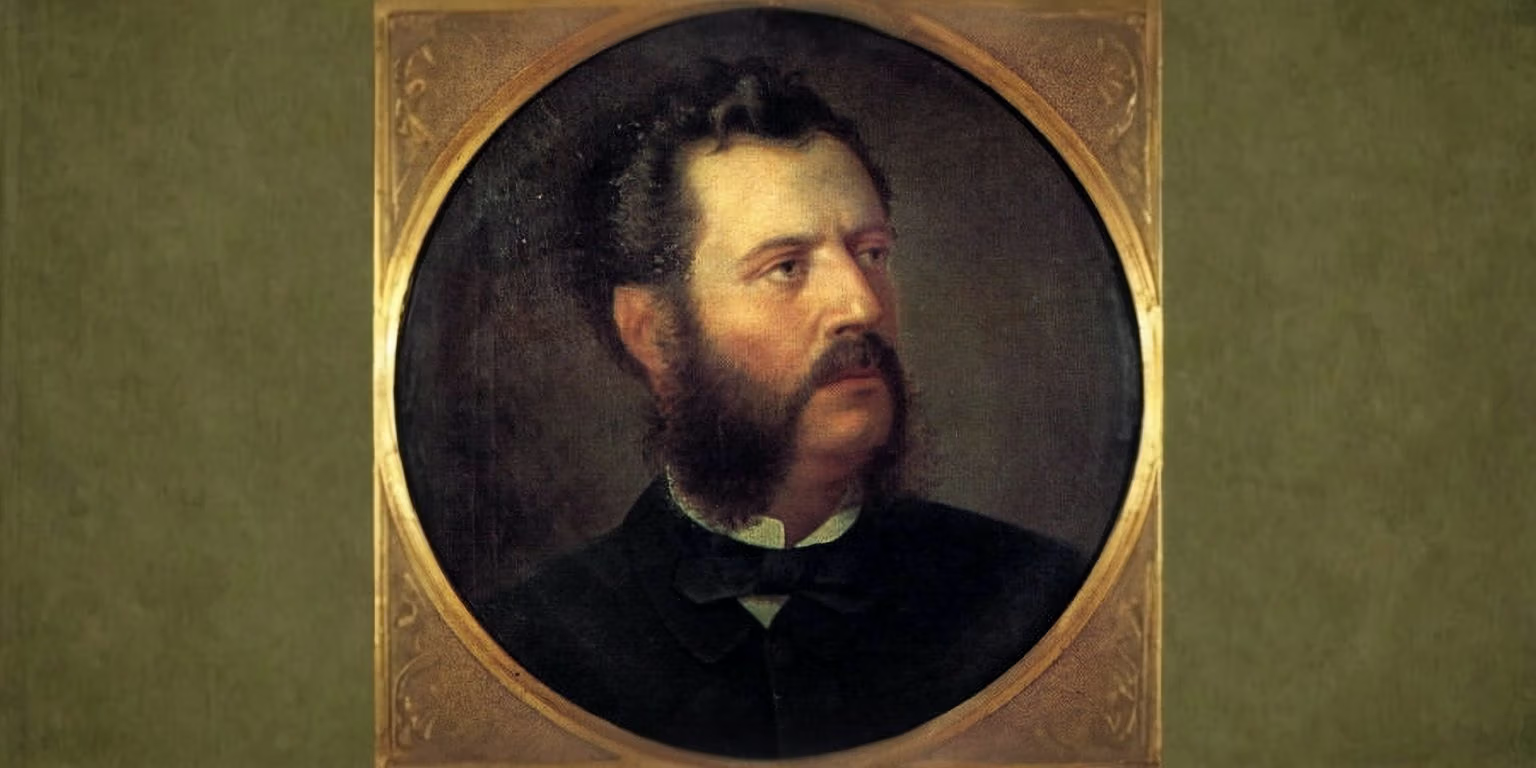
Valaoritis wrote Fotinos on Madouri after withdrawing from Athenian politics. The poem returns to Lefkada for the revolt of 1357 and uses the demotic Greek of his earlier work. Death interrupted the fourth canto; the surviving poem appeared in 1891.
The 24 July entry in The Ephemeris, Othisis’s almanac of Ionian memory.
The island opposite Nydri
Madouri is a small, wooded islet at the mouth of Nydri’s bay, and it has belonged to the Valaoritis family for generations. Locals still call it το νησί του Βαλαωρίτη, the poet’s island.
At the end of the 1860s, after the failure of the Cretan uprising, Valaoritis withdrew there from Athenian politics. He had argued for union in the Ionian Parliament, served twice in the Greek Parliament and declined a ministry three times. On Madouri, he returned to his manuscripts.
The house on Madouri still stands and remains in family ownership. It appeared in Billy Wilder’s 1978 film Fedora. The islet can be seen from Nydri but is private property.
Three cantos of Fotinos
On Madouri, Valaoritis made the revolt of 1357 against Venetian rule on Lefkada the subject of his final poem. His earlier works, including Kyra Frosini, Athanasios Diakos and Astrapogiannos, had placed the heroes of 1821 in national memory.
For Fotinos, he chose Lefkada’s oldest recorded act of defiance and continued writing in the living language of the people, away from the formal Katharevousa of the salons.
Valaoritis completed three cantos. Death interrupted the fourth, and the unfinished poem was published posthumously in 1891.
«Μέριασε βράχε νὰ διαβῶ!» τὸ κῦμα ἀνδρειωμένο
λέγει στὴν πέτρα τοῦ γυαλοῦ θολό, μελανιασμένο.“Stand aside, rock, and let me pass!” the wave, grown bold, murky and bruised dark, says to the stone of the shore.
Aristotelis Valaoritis, The Rock and the Wave. English translation by Othisis.
Commemoration and publication
A statue in Lefkada Town and his grave at the Church of Pantokratoras commemorate Valaoritis. The Rock and the Wave also remains one of his most frequently anthologised poems. Lefkada’s next major poet, Angelos Sikelianos, was born in the same town in 1884, five years after Valaoritis died.
Extended Read
Aristotelis Valaoritis, a national poet of Greece. The Othisis essay on his life, education, works and politics.
Further Reading
Selected poems of Aristotelis Valaoritis. The Greek texts, including The Rock and the Wave.
Lefkada News: on this day in 1879. A Lefkadian remembrance of the poet’s death.
References
Othisis Solutions. (2025). Aristotelis Valaoritis.
Lefkada News. (n.d.). Έφυγε σαν σήμερα το 1879 από τη ζωή ο Αριστοτέλης Βαλαωρίτης.
Η Διαδρομή. (2020). Αριστοτέλης Βαλαωρίτης, επικός ποιητής 1824-1879.
Μηχανή του Χρόνου. (n.d.). Αριστοτέλης Βαλαωρίτης, ο εθνικός ποιητής.
Σπουδαστήριο Νέου Ελληνισμού. (n.d.). Αριστοτέλης Βαλαωρίτης, Συλλογή ποιημάτων.
Related on The TachyDrome
Read Aristotelis Valaoritis and Angelos Sikelianos: Lyric Life and the Delphic Festivals for two chapters of Lefkada’s literary history.