Angelos Sikelianos: Lyric Life and the Delphic Festivals
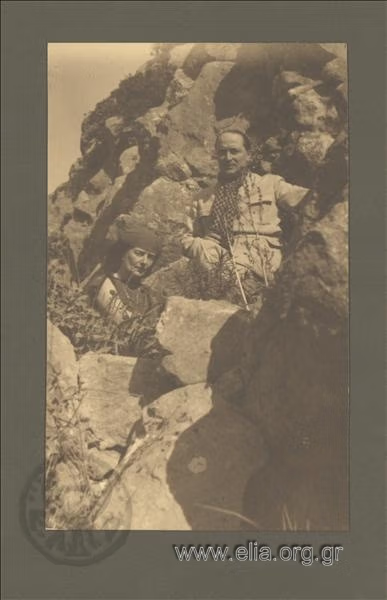
Angelos Sikelianos, a lyric poet and playwright from Lefkada, created the Delphic Festivals of 1927 and 1930 with Eva Palmer-Sikelianos. Their programmes combined Aeschylus, Byzantine music, craft and athletics. The planned international centre remained unrealised, but the festivals left a material archive and a public record of their collaboration.
Lefkada and Alafroiskiotos
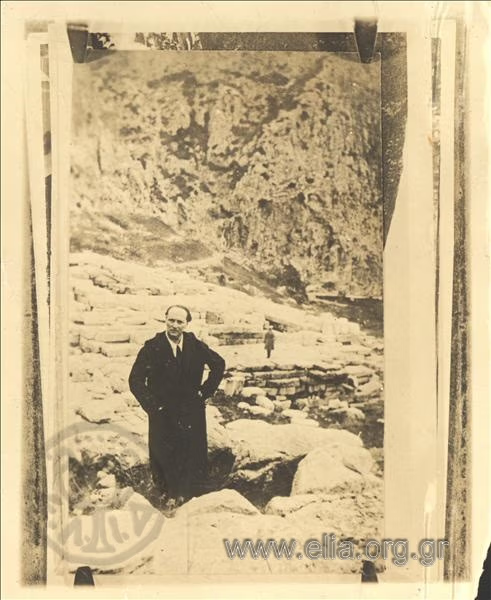
Born on Lefkada in 1884, Sikelianos completed his schooling there and began writing poetry as a teenager. In 1901 he enrolled in law at Athens. His work soon moved into Konstantinos Christomanos’s New Stage and journals including Dionysos, Panathinaia and Noumas. During a 1905 journey to Libya, he wrote Alafroiskiotos, published in 1909 (Biblionet, n.d.).
His language could be ecstatic and incantatory. It could also resist translation and restraint. Critic David Ricks described Sikelianos as “prolific, vatic, uneven,” while arguing that no twentieth-century Greek poet deserved more serious attention (Greek News Agenda, 2020).
A poem becomes a programme
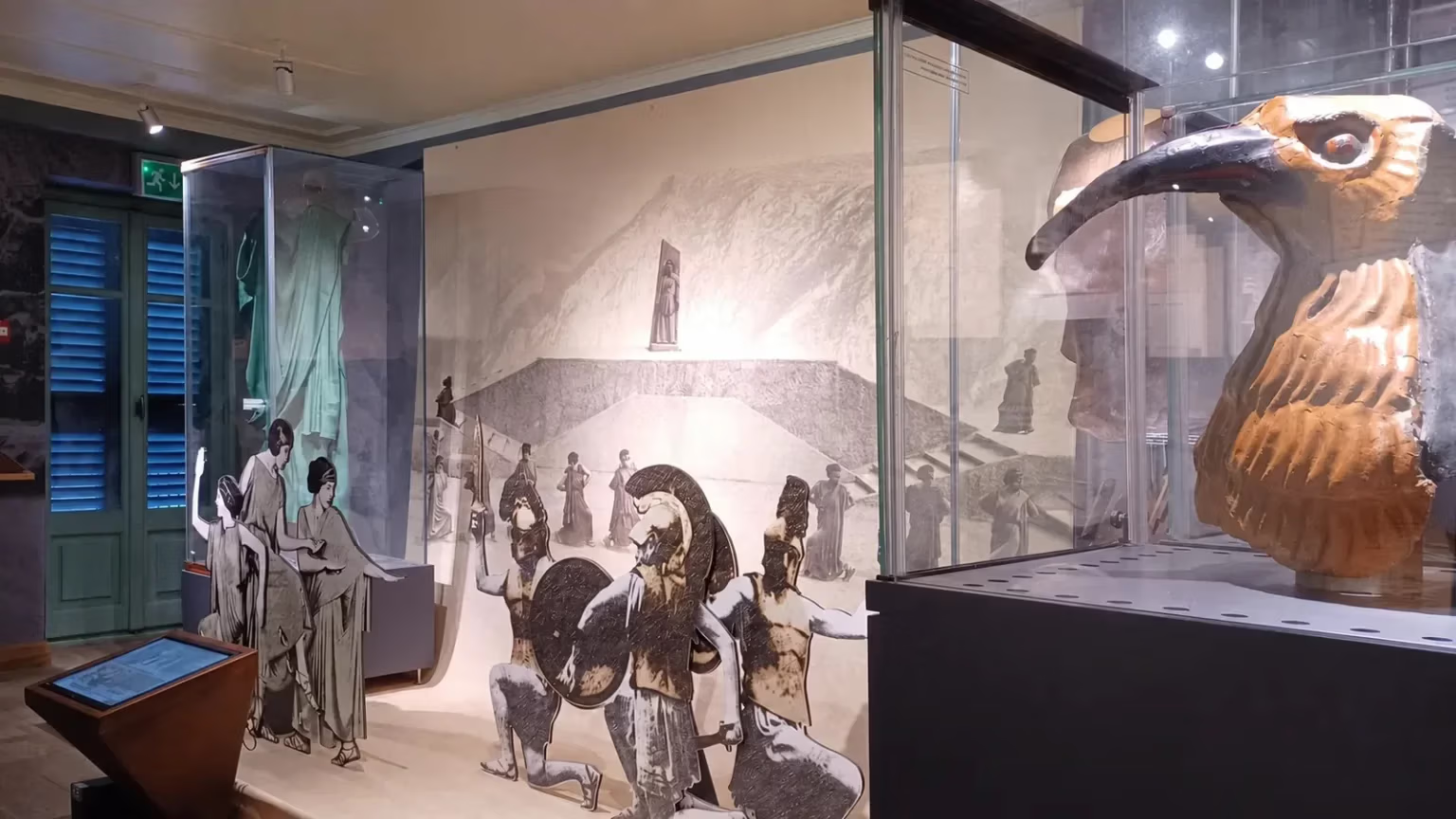
Eva was central to the undertaking. An American artist, weaver, musician and theatre-maker, she financed the first festival, made costumes and shaped its music and movement. On 9 and 10 May 1927, visitors saw Aeschylus’s Prometheus Bound, traditional and Byzantine music, a folk-art exhibition, athletic contests, Pyrrhic dancing and a torch race along the Sacred Way. Theatre, craft, music and bodily discipline were assembled as parts of one civic ritual (Benaki Museum, 2023; Brown University Library, n.d.).
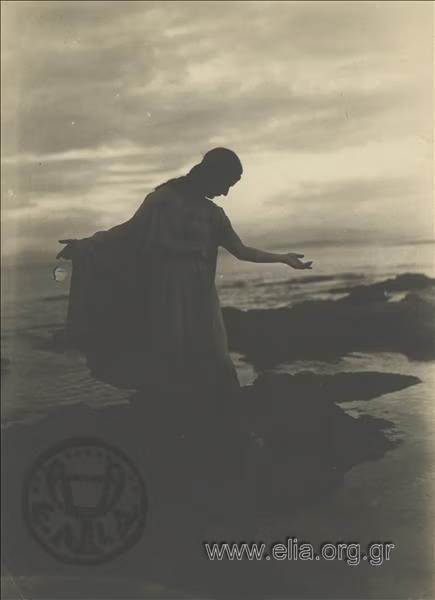
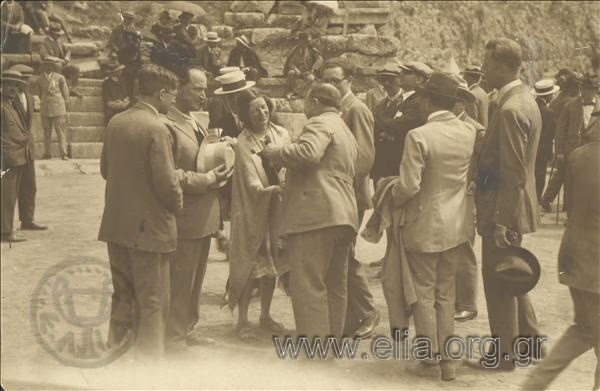
The second festival opened on 1 May 1930. It repeated Prometheus Bound, added Aeschylus’s The Suppliants and expanded the programme across several dates. Support from the Greek National Tourism Organisation and private sponsors kept the programme temporary. Its costs left Eva Palmer-Sikelianos bankrupt, and she returned to the United States in 1933 (Benaki Museum, 2023).
The festivals left an archive of woven costumes, masks, photographs, music and choreography. The European Cultural Centre of Delphi, founded in 1977, now identifies itself as the institutional successor to the Delphic Idea (European Cultural Centre of Delphi, 2025).
Angelos Sikelianos and Sacred Way
In 1935, Sikelianos published Sacred Way. The poem begins with a solitary walk from Athens towards Eleusis.
A man approaches with two chained bears, a mother and cub, and forces them to dance. Sikelianos turns the encounter into a question: whether the bear, her handler and the poet can ever celebrate together (Greek Ministry of Education, n.d.; ERT Archive, 2006).
The Greek Ministry of Education’s edition reads the scene as a confrontation with domination, pain and humanity’s estrangement from nature. The poem narrows Sikelianos’s universal ambition to one witnessed act of cruelty. The Delphic project had sought an institution for human fellowship. Sacred Way tests the same desire against an animal’s chain and the coin the poet gives its handler (Greek Ministry of Education, n.d.; ERT Archive, 2006).
«Θά ’ρτει τάχα ποτέ, θε νά ’ρτει η ώρα
που η ψυχή της αρκούδας και του Γύφτου,
κι η ψυχή μου, που Μυημένη τήνε κράζω,
θα γιορτάσουν μαζί;»“Will it ever come, will the hour arrive when the bear’s soul, the Roma man’s soul and my own, which I call initiated, will celebrate together?”
Angelos Sikelianos, Sacred Way (1935). English translation by Othisis.
Poetry in public
During the Axis occupation of Greece, Sikelianos wrote the poems collected as Akritika. On 28 February 1943, at the funeral of Kostis Palamas, he recited Sound the Trumpets. ERT’s archive records that the funeral became a mass demonstration against the German occupation. Two years later, after liberation, Spiritual March opened with a collective imperative (ERT, 2024; ERT Archive, n.d.; Greek Ministry of Education, n.d.).
«Ομπρός· βοηθάτε να σηκώσουμε τον ήλιο πάνω απ’ την Ελλάδα·
ομπρός, βοηθάτε να σηκώσουμε τον ήλιο πάνω από τον κόσμο!»“Come, help us lift the sun above Greece; come, help us lift the sun above the world!”
Angelos Sikelianos, Spiritual March (1945). English translation by Othisis.
Lyric Life
The Nobel Prize archive records nine nominations for Sikelianos across six consecutive prize years, from 1946 to 1951. Anders Österling made the first in 1946. Later nominators included Nikos Bees, Elin Wägner, Axel Persson, Sigfrid Siwertz, Hjalmar Gullberg and the Hellenic Authors’ Society. Proposals in 1950 and 1951 paired Sikelianos with Nikos Kazantzakis.
A nomination did not confer finalist status. The six-year sequence documents sustained attention from Greek and Swedish literary circles (Nobel Prize, n.d.).
The house in Lefkada
Sikelianos died in Athens on 19 June 1951. His family home in Lefkada became the Angelos Sikelianos Museum and opened on 6 October 2017 (Angelos Sikelianos Museum, n.d.).
Its collection places the poet’s manuscripts and recorded voice beside evidence of Eva’s work: their correspondence, her passport, woven garments, costumes and a braid of her red hair. The house presents the Delphic undertaking as a collaboration preserved in paper, cloth, image and sound (Angelos Sikelianos Museum, n.d.).
Visiting the museum
The museum occupies the house on Kyprou Street in Lefkada Town where Sikelianos was born. The National Bank of Greece bought the house in 2009, restored it and gave it to the Municipality of Lefkada.
Entry is free. On 20 October 2026, the museum’s website listed opening hours of 09:00 to 15:00, Tuesday to Saturday, with the museum closed on Sunday and Monday. The tourism page of the Regional Unit of Lefkada gives different hours, so confirm by phone on +30 2645 301837 or by email before a visit. The house has a lift and accessible toilets.
Further Reading
Nobel Prize Nomination Archive: Angelos Sikelianos. The primary record of nine nominations from 1946 to 1951.
Nelly’s, Benaki Museum. A documented programme of the 1927 and 1930 Delphic Festivals, including their financing, performances and material culture.
Angelos Sikelianos, ERT Archive. Archival film, recorded recitations and testimony concerning Lefkada, Delphi and the occupation.
Sacred Way, Greek Ministry of Education. The Greek text with contextual notes.
References
Angelos Sikelianos Museum. (n.d.). Angelos Sikelianos Museum. Opening hours and address retrieved 20 October 2026.
Benaki Museum. (2023). Nelly’s.
Biblionet. (n.d.). Sikelianos, Angelos, 1884–1951.
Brown University Library. (n.d.). Eleni Sikelianos, Rehearsal Is at Dawn.
ERT. (2024). Angelos Sikelianos, 15 March 1884.
ERT Archive. (2006). Epochs and Writers: Angelos Sikelianos, Part 2.
ERT Archive. (n.d.). Testimonies: The funeral of Kostis Palamas.
European Cultural Centre of Delphi. (2025). The Delphic Idea: From Antiquity to Sikelianos and the Post-Human Era.
Greek Ministry of Education. (n.d.). Angelos Sikelianos, Sacred Way.
Greek Ministry of Education. (n.d.). Angelos Sikelianos, Spiritual March.
Greek News Agenda. (2020). Poem of the Month: A Tribute to Greek Poet Angelos Sikelianos.
Nobel Prize. (n.d.). Nomination Archive: Angelos Sikelianos.
Regional Unit of Lefkada. (n.d.). Museum of Angelos Sikelianos. Retrieved 20 October 2026.
Related on The TachyDrome
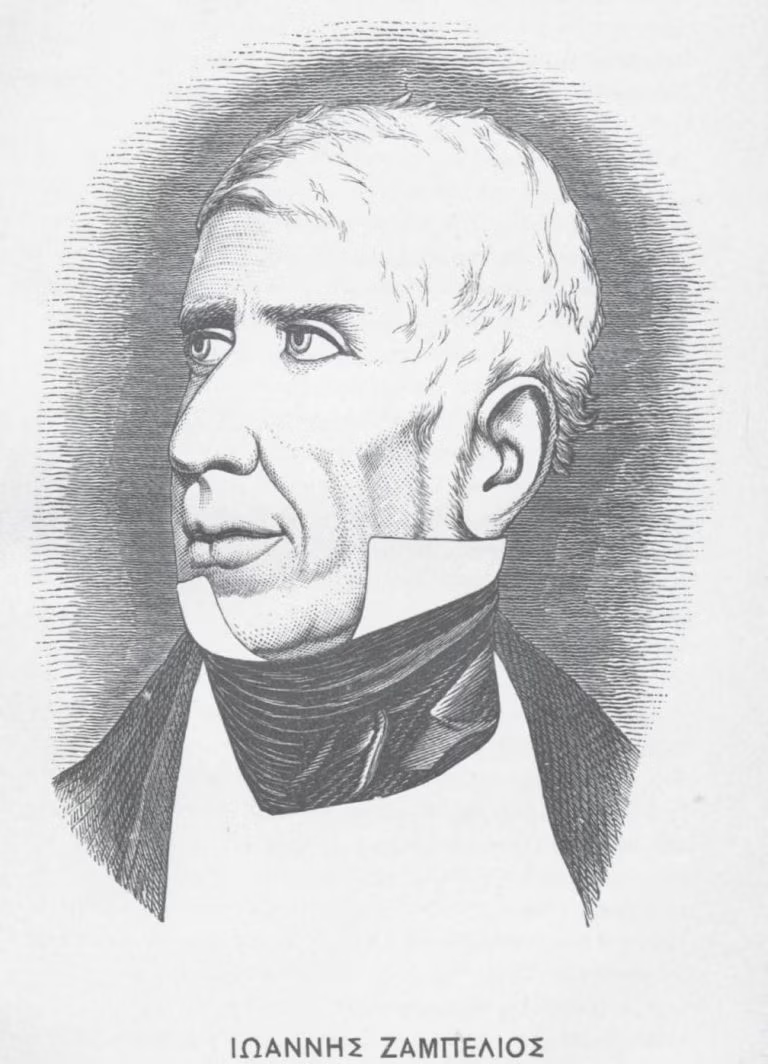
Read Aristotelis Valaoritis and Spyridon Zambelios and the Bridge to Byzantium for two other chapters in Lefkada’s literary and intellectual history.