Karya’s Country Wedding: Embroidery, Dowry, and Re-enactment
Karya’s re-enactment reconstructs the order of a mountain Lefkadian wedding and places household work inside the ceremony. Fresh local reports document matchmaking, the dowry agreement, wool washing, bread preparation and the public display of the dowry before the second night’s procession and feast.
The 2026 two-night performance
Aroma Lefkadas reported that the first night presented the proxenia, or matchmaking; the ligatocharti, which recorded the dowry agreement; the engagement gifts; the washing of wool; the preparation of wedding breads; and the karfomata. The report credits the photographs to Thanasis Katopodis.
“Τα καρφώματα: Η επίσημη καταμέτρηση και παρουσίαση των προικιών.”
Aroma Lefkadas, first-night report, 2 August 2026
The sentence identifies karfomata as “the formal counting and presentation of the dowry” (translation by Othisis). The second report, published on 3 August, records the next stage: horses, priest, best man and couple moved to a stone house for the ceremony. Afterwards, the dowry was loaded onto horses and taken with musicians to the square for the feast.
Embroidery inside the dowry
Greece’s National Inventory of Intangible Cultural Heritage registered Karsaniko embroidery in 2019. Its dossier describes a fine counted technique developed in Karya and associated with Maria Stavraka, known as Koutsochero. It is worked with a sewing needle on linen or cotton, using silk or cotton thread, and depends on careful measurement.
Embroidery formed part of the wedding material. The dossier lists embroidered tablecloths, curtains, sheets and pillowcases among household dowry goods. It also identifies the embroidered groom’s shirt as an important part of Lefkada’s male wedding dress.
Before the wedding, these textiles were arranged for guests to inspect. The dossier records that the quantity and quality of the work were used to judge the mother and daughter’s domestic worth, while the groom’s shirt could signal family standing. These judgments document the social standards imposed on women and families.
The red thread of the karfomata
The inventory gives the clearest link between the embroidery and the public wedding sequence. It describes karfomata as the Friday display of the bride’s dowry. Garments and textiles were fastened with red thread and shown one by one, with the embroidery taking a leading place.
The 2026 first-night report used the same term and noted the red thread “for good fortune.” The correspondence establishes how the organisers presented the embroidered dowry in 2026; the degree of continuity with earlier practice remains unresolved.
From a first staging to an annual event
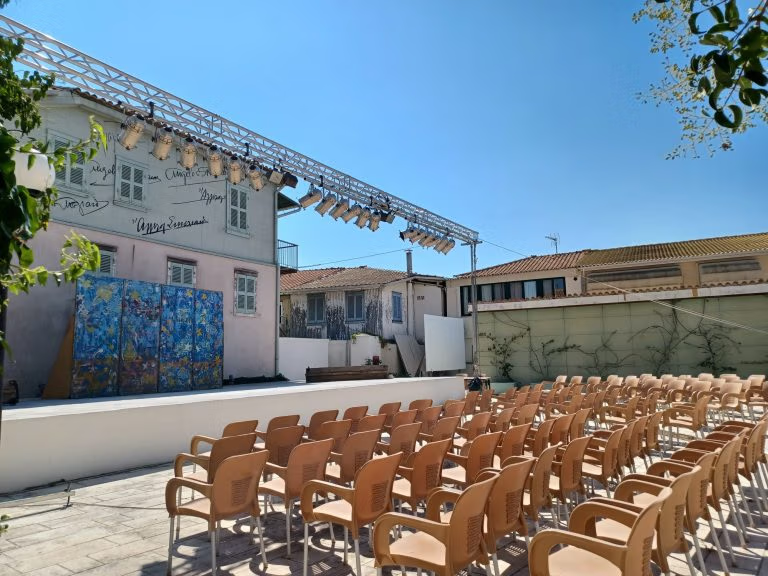
Apollon Karya’s history places the first public re-enactment in the village square in 1954. The Municipality of Lefkada dates the annual presentation from 1979. Read together, the records distinguish an early staging from the later annual series. The 2026 performance also marked 70 years since Apollon’s foundation in 1956.
As an organised interpretation, the re-enactment makes the sequence visible: an agreement between families, work shared around the household, textiles displayed and assessed, a public procession, a ceremony and a communal feast. Karsaniko embroidery gives that sequence a material record made by Karya’s women.
Extended Read
For the village and the practical limits of an off-season visit, read Karya and Englouvi Outside Summer.
Further Reading
References
- Aroma Lefkadas, “First day of the Karya Country Wedding re-enactment”, 2 August 2026.
- Aroma Lefkadas, “Second day of the Karya Country Wedding re-enactment”, 3 August 2026.
- National Inventory of Intangible Cultural Heritage of Greece, “Karsaniko Embroidery, Karya, Lefkada”, dossier prepared 2018 and registered 2019.
- Municipality of Lefkada, “Karya”.
- Apollon Karya, “Brief History”.
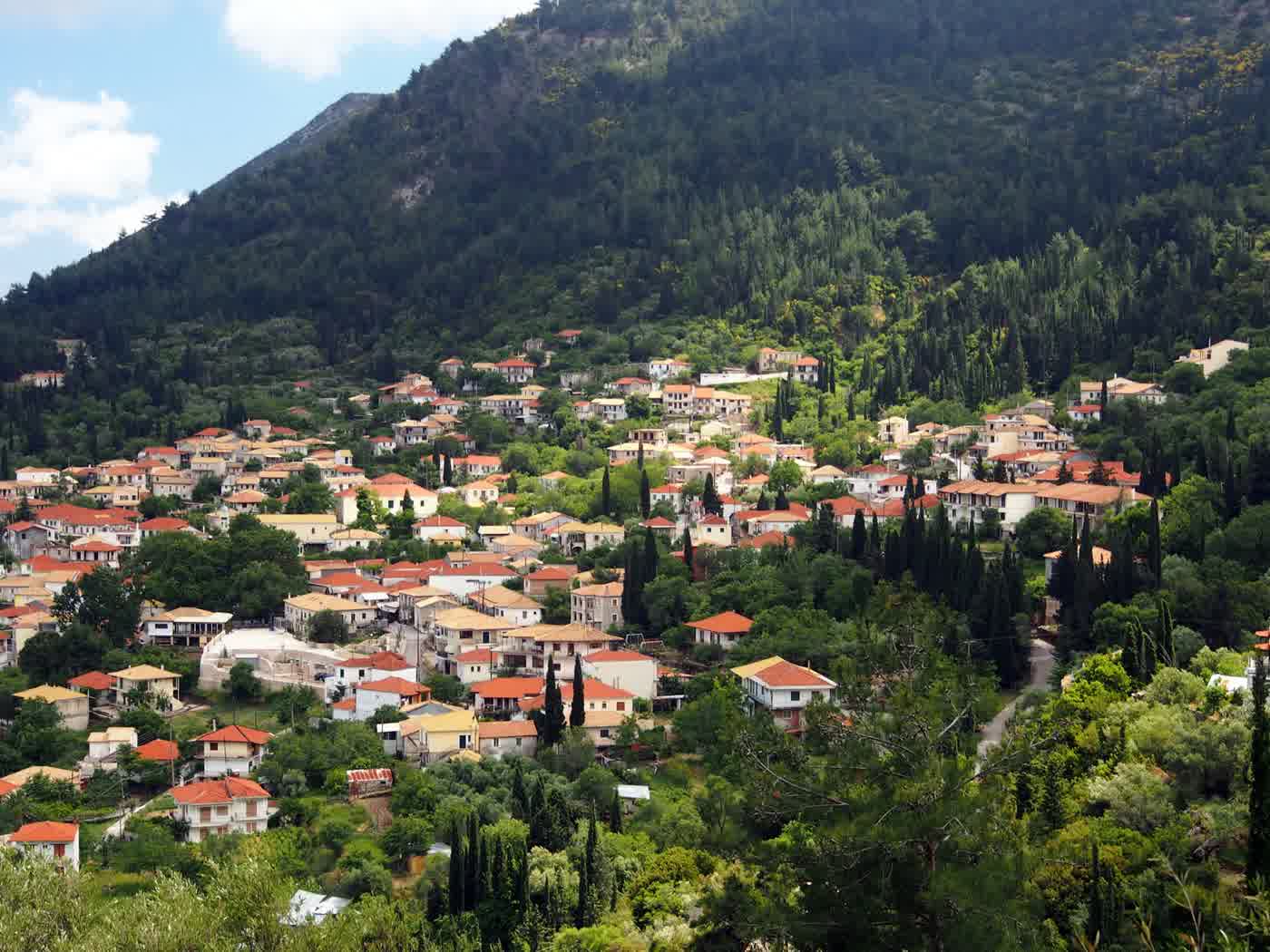
- Alf van Beem, “Karya pic1”, 30 May 2014, CC0 1.0.