Lefkada’s olive mills: from horse power to the museum
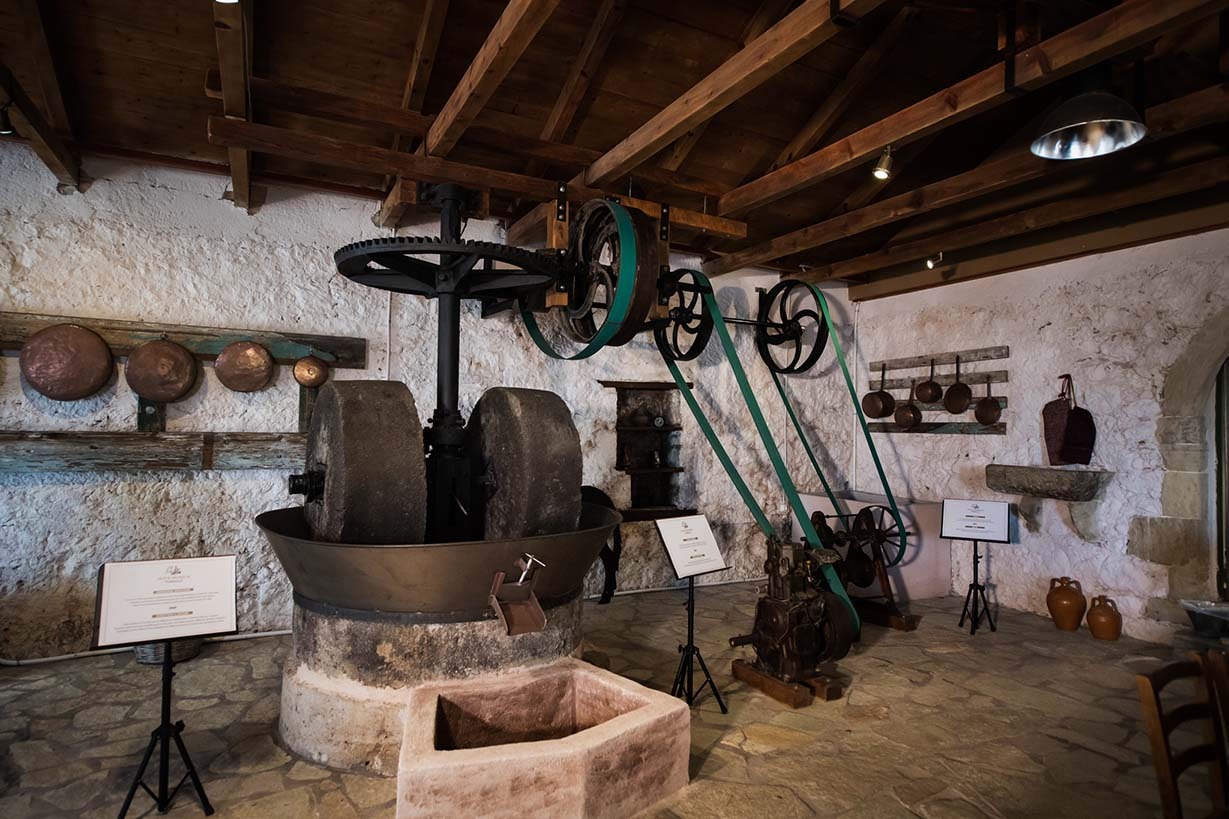
At Fabbrica in Syvros, a village in southern Lefkada, olive milling passed from horse power to a diesel engine and then an electric motor. The former mill is now a museum. Its machinery gives a precise display for the visitor, on the history and process of oil making, on an island dominated by olive groves.
The power changed before the mill closed
According to Fabbrica’s own history, the Tsarlambas family’s mill worked until the mid-1970s. It belonged to a complex that also contained homes, stables, an olive warehouse and a wood-fired oven. Production occupied a place where people lived, kept animals and stored the crop.
In the museum’s photographs, upright millstones sit in a circular basin beneath wheels and drive belts. Elsewhere, a tall screw press stands beside storage vessels. These are different machines with different jobs. Looking from one to the other makes the distinction between grinding the fruit and extracting its oil visible.
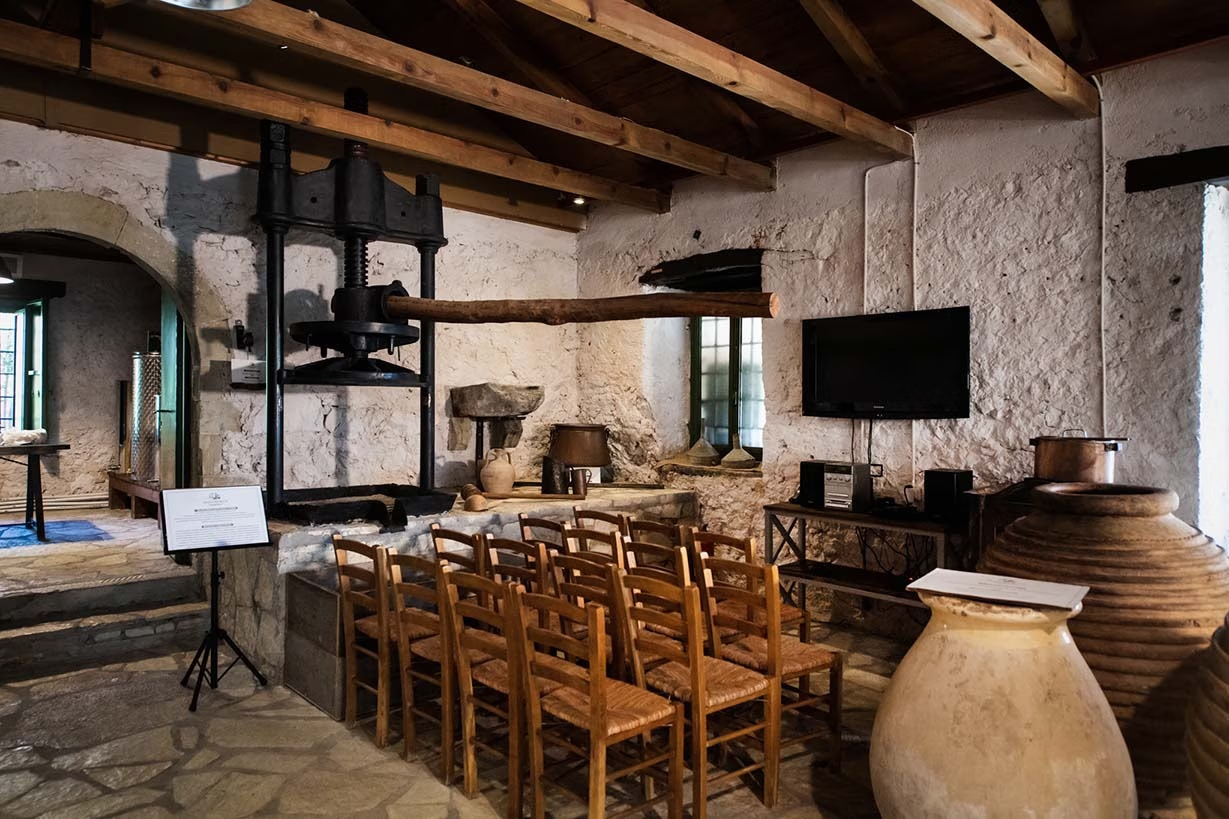
Crushing is only the first operation
Crushing breaks the olive’s cells and releases oil into a paste. The oil must then be separated from the other material. The Museum of Industrial Olive-Oil Production on Lesvos explains the older production sequence through three operations: crushing the fruit, pressing the pulp and separating oil from water.
The distinction remains useful when looking at modern equipment. UC Davis’ account of olive-oil processing describes a line containing a crusher, a malaxer, a decanter and a separator. Malaxation is the controlled mixing of the paste before separation. Its duration and temperature affect extraction and the oil’s sensory qualities. A millstone explains one part of the work; it cannot explain the whole bottle.
The change from animal power to an engine therefore answers one question, how the equipment was driven. It does not by itself tell us how an oil tasted, how much a mill produced or whether a particular batch was good. Those judgments require evidence about the fruit and the processing.
A Lefkada mill survives in Sparta
One Lefkadian machine can be seen well beyond the island. The Museum of the Olive and Greek Olive Oil in Sparta, in the Peloponnese, displays an olive mill from Lefkada. Its account identifies the machine as evidence that animal power remained in use into the twentieth century.
The display places the Lefkadian mill alongside reconstructions of earlier presses and models of engine-powered equipment. It resists a tidy division in which animal-powered milling belongs only to a remote past. On Lefkada, that technology lasted into a century also represented by diesel engines and electric motors at Syvros.
Oil for the table, the body and the lamp
The island’s older oil economy appears in smaller objects. In Environment and Culture 2008/9, page 39, the Greek Ministry of Culture and Tourism describes a group from the ancient city of Lefkada dated to the fifth through third centuries BC. It includes serving jugs, vessels for perfumed oil and lamps. A pitcher-shaped container carries olive branches in relief.
The publication also records a crushing basin and a basin used for pressing olive pulp or grapes. That last qualification is worth retaining: agricultural equipment could serve more than one crop. Together, the vessels and basins place oil in several kinds of daily work, from preparation and storage to personal care and lighting.
A visitor can follow that material history without treating a museum as a working mill. Fabbrica offers tastings as well as its equipment display. For a visit during November 2026 to April 2027, its website lists access by arrangement; contact the museum before travelling. The millstones and press give the tasting a question worth asking: which operations produced the oil in the glass?
Featured photograph: millstones, wheels and drive belts at Fabbrica Olive Museum, Syvros. Photograph: Fabbrica Olive Museum; photographer not identified.
Extended Read
A longer Lefkada season starts in the mountain villages considers the accommodation, meals and transport needed to make visits beyond the coast practical.
Further Reading
The Museum of the Olive and Greek Olive Oil presents the wider history of oil’s uses and production technology.
References
- Fabbrica Olive Museum: history, equipment photographs and visiting information. Checked 2 November 2026.
- Piraeus Bank Group Cultural Foundation: Museum of the Olive and Greek Olive Oil, Sparta.
- Piraeus Bank Group Cultural Foundation: Museum of Industrial Olive-Oil Production of Lesvos.
- University of California, Davis: Olive Oil Processing.
- Ministry of Culture and Tourism, Environment and Culture 2008/9 (2009), p. 39.