Ochi at three in the morning: Kifisia, Elaia and the Lefkadians of 1940
“Alors, c’est la guerre.”
Ioannis Metaxas to Emanuele Grazzi, Kifisia, about 3 a.m. on 28 October 1940, as recorded in Grazzi’s memoir Il principio della fine (1945)
At ten to three on the morning of 28 October 1940 the Italian minister in Athens, Emanuele Grazzi, stood at the gate of Ioannis Metaxas’ house in Kifisia with an ultimatum that expired at six. Greece refused it, ordered general mobilisation the same day, and met the Italian attack in Epirus on a defensive position its army had been preparing since 1939.
Three o’clock in Kifisia
Grazzi’s own account, published in 1945 as Il principio della fine, gives the sequence. To avoid notice he left the embassy car behind and travelled in his military attaché’s plainer car, which the attaché drove himself, with only an interpreter beside them. They reached the small villa at ten to three. A gendarme rang the electric bell; nobody answered for several minutes.
Metaxas came to a small service door himself, recognised the minister and had him let in. He wore a dressing gown over a cotton nightshirt and led Grazzi into a small sitting room (Greek translation of the memoir, transcribed by I. Daskarolis).
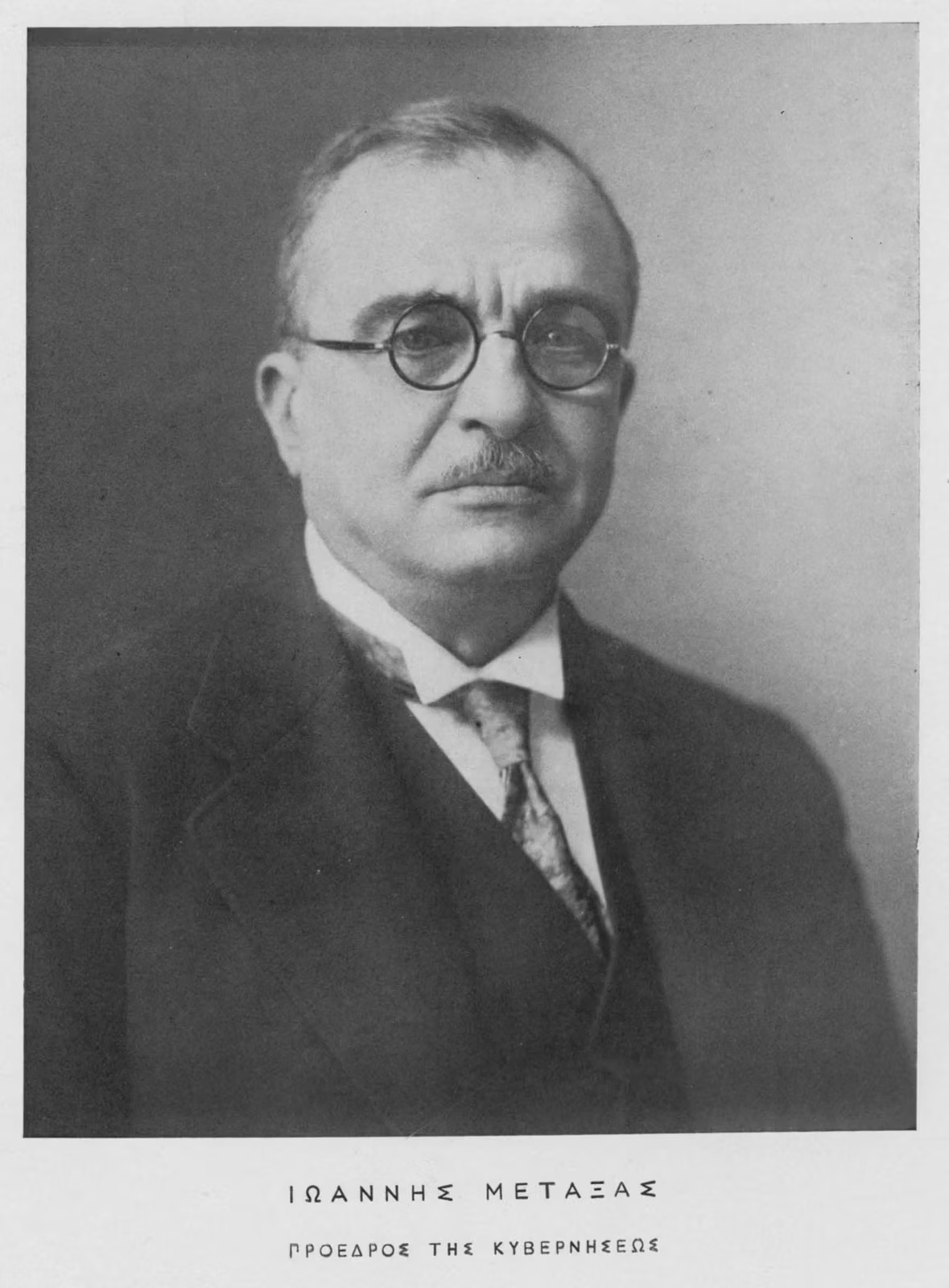
Grazzi handed over the note without comment. He wrote that Metaxas’ hands trembled slightly as he read and that his eyes filled behind his glasses. Then Metaxas looked up and said, in French, “Alors, c’est la guerre”: so it is war. The exchange that followed, in Grazzi’s telling, turned on the note’s vagueness. Metaxas asked which “strategic points” Italy meant to occupy. Grazzi answered that his government had not told him.
Metaxas called the note a declaration of war; Grazzi insisted it was an ultimatum and asked whether Greece would grant the facilities requested.
“No. There can be no question even of free passage.”
Metaxas’ reply as given in the Greek translation of Grazzi’s memoir. English translation by Othisis.
Metaxas added a practical point. It was three in the morning, the note expired at six, and even if he had been willing to give such an order, which he was not, it could not reach the frontier in time.
Italian artillery opened on the front of the Greek VIII Division about half an hour before the deadline (ETFL, The military dimension of 28 October 1940). The word later carried on banners, Ochi, has its basis in Grazzi’s record. It was Metaxas’ answer to the demand for passage.
The mobilisation order of 28 October
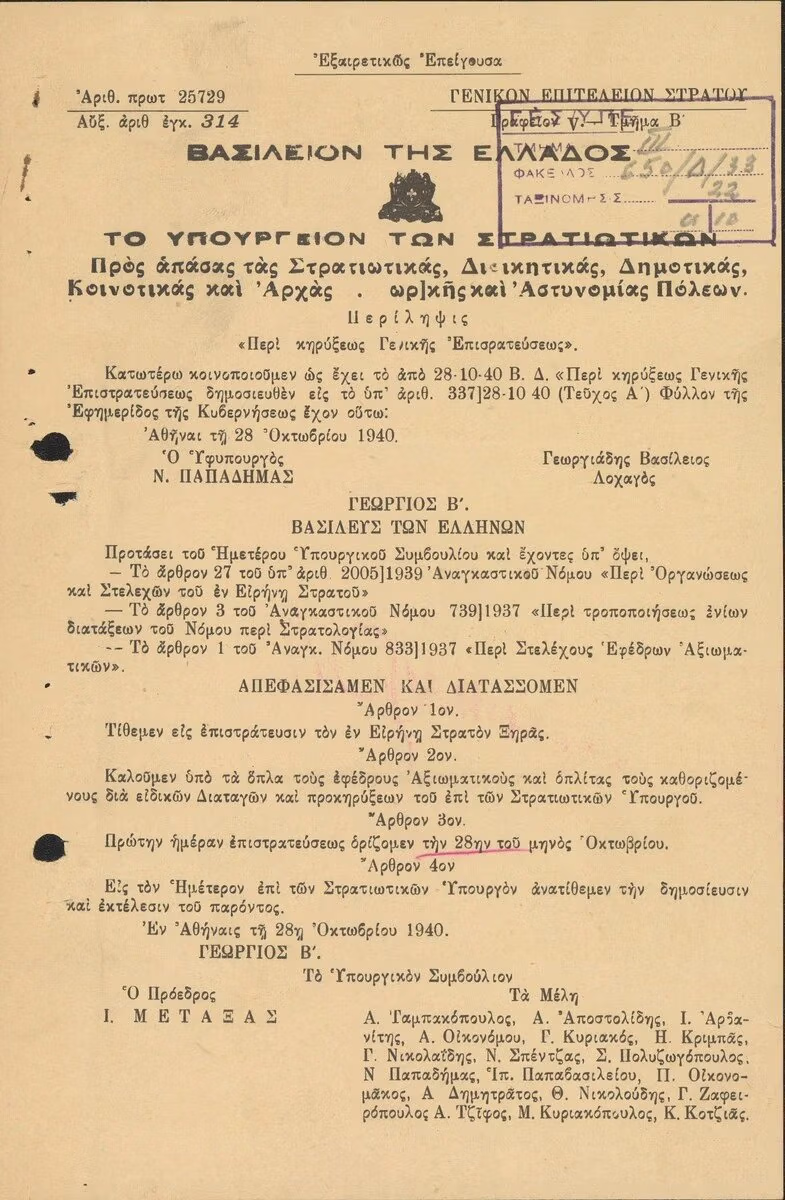
The same day the Hellenic Army General Staff issued the order for general mobilisation. The printed order survives and is reproduced below. The pre-war plans were built around it. The peacetime army had to hold the border until reservists reached their units.
The first days on paper
What had been prepared, and where
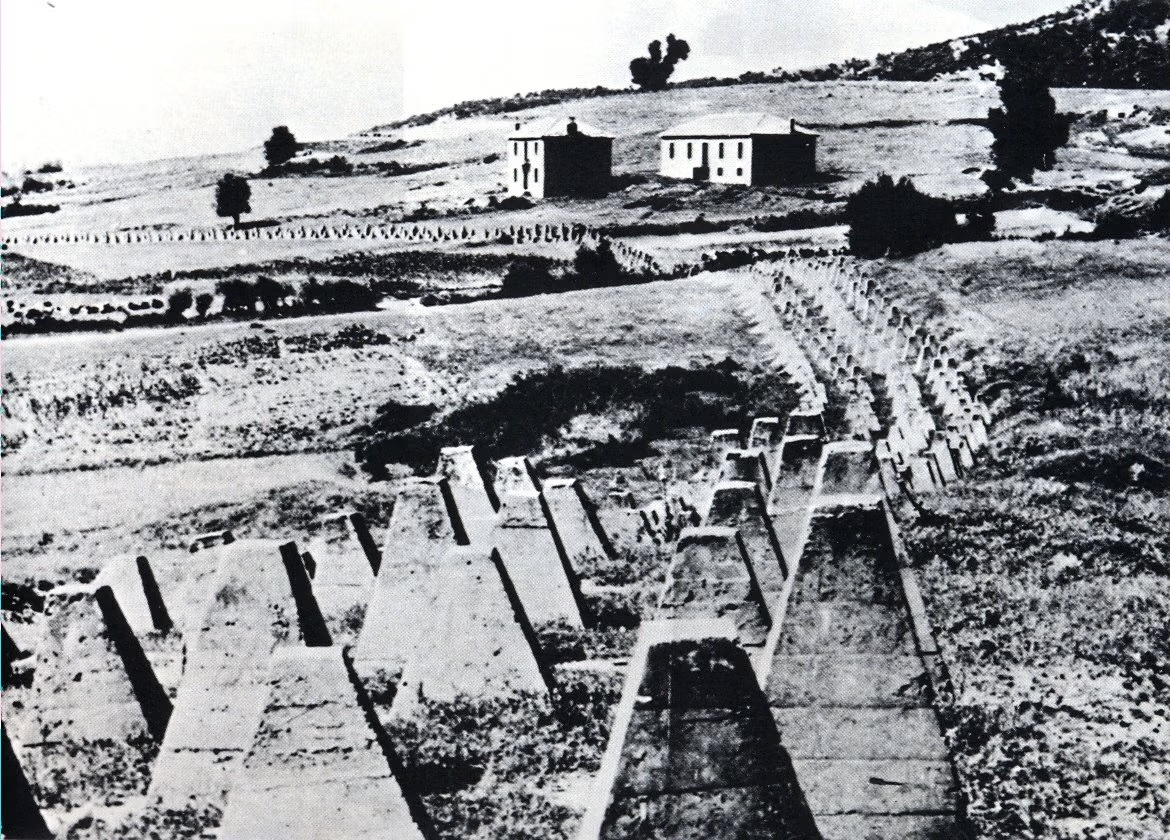
The Metaxas government prepared for war on more than one front. On the northern frontier it built the Metaxas Line, a chain of 21 fort complexes along the Greek-Bulgarian border begun in 1936 (summary and fort list). Its concrete would be tested by the Germans in April 1941.
In Epirus the same foresight produced a plan and a prepared position. After Italy occupied Albania in April 1939, the General Staff drew up Plan IB, for war against Italians and Bulgarians at once, and issued it in May 1939. It was defensive on both fronts. Its main line in the west ran along the Aliakmonas, the Venetikos, the Zygos pass at Metsovo and the river Arachthos. That line gave up most of Epirus. The aim was to delay the enemy for about fifteen days while the country mobilised (ETFL).
Two variants followed. Variant IBa, of September 1939, moved the main resistance forward to a line near the border: the river Kalamas, Elaia, Grabala and the Smolikas massif. It was assigned to VIII Division under Major General Charalambos Katsimitros, from Smolikas to the Ionian, and to the Pindus Detachment on its right. Variant IBb, of April 1940, placed the defence at an intermediate line between frontier and Arachthos (Mixani tou Chronou; Themata Stratiotikis Istorias).
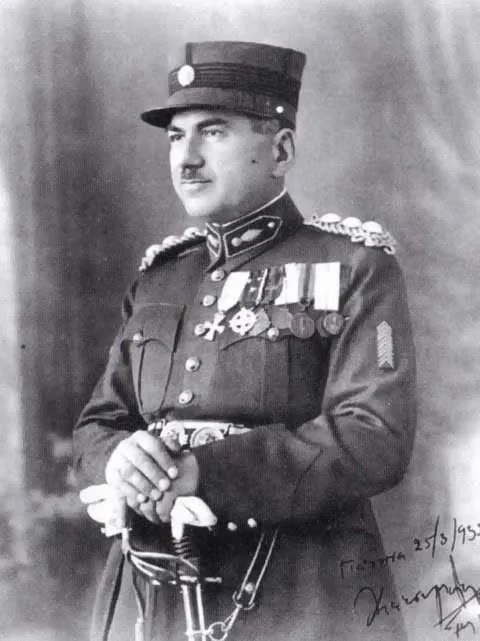
According to the Hellenic Army’s own account, the Elaia-Kalamas position ran from the Ionian along the Kalamas to its sources near Elaia, then along the slopes of Tymfi and Smolikas to Grammos. It lay 5 to 20 kilometres inside Greek territory and covered about 100 kilometres in a straight line, against a frontier of 240. VIII Division, reinforced, numbered about 35,000 men in three sectors: Negrades, Kalamas and Thesprotia (Hellenic Army, Battle of Pindus, Elaia and Kalamas). The height of Kalpaki, 493 metres, commanded the only road to Ioannina (Presidency of the Hellenic Republic).
The division fortified the arc from Grabala through Asonista, Vella and Repetista to the monastery of Agios Athanasios. It dug trenches and gun and machine-gun positions, with an anti-tank ditch at the lowest point.
The division’s fortification committee, under Colonel Panagiotis Mavrogiannis, did this with little money and mostly with the unpaid labour of local villagers. Where the rock was too hard for trenches, Katsimitros later wrote, specialists brought from Athens cut machine-gun posts into it.
“Strong machine-gun posts, of strength equal to permanent ones, with two embrasures and an underground entrance.”
Charalambos Katsimitros, Epirus in the Forefront (Η Ήπειρος προμαχούσα, Athens, 1950), quoted in Mixani tou Chronou. English translation by Othisis.
That was the foresight of 1939 and 1940: a plan chosen early, a forward position surveyed and fortified in advance, and a division placed on it before the ultimatum arrived.
Elaia and the Kalamas, 2 to 8 November
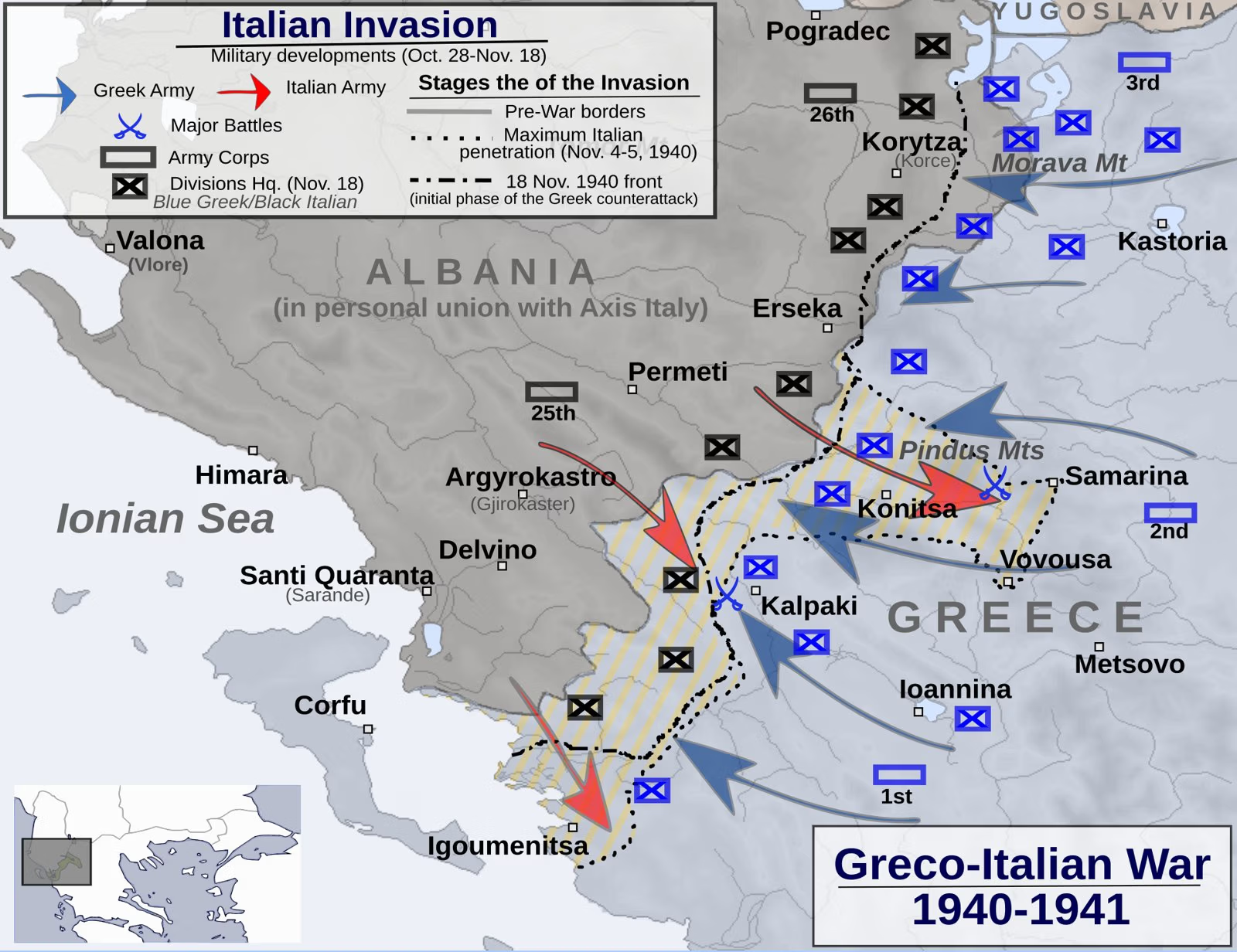
On 28 October the Greek covering units fell back, fighting, to the prepared positions, as the plan required. From 2 to 8 November they attacked the Elaia position and did not break it. By 9 November the Italians in Thesprotia had pulled back, keeping only a small bridgehead south of the Kalamas, the single gain of the surprise attack in Epirus (ETFL).
From the ultimatum to the front
The Lefkadians on the waterfront stele
On the waterfront of Lefkada town stands the Heroes’ Memorial, raised for the island’s dead of the 1897 war. Beside it stands a stele for those of 1940 and 1941, with the inscription quoted below. The names below follow the transcription of the stele published by the local news site Aroma Lefkadas.
Στους πεσόντες στο έπος 1940-1941 η Λευκάδα ευγνωμονούσα
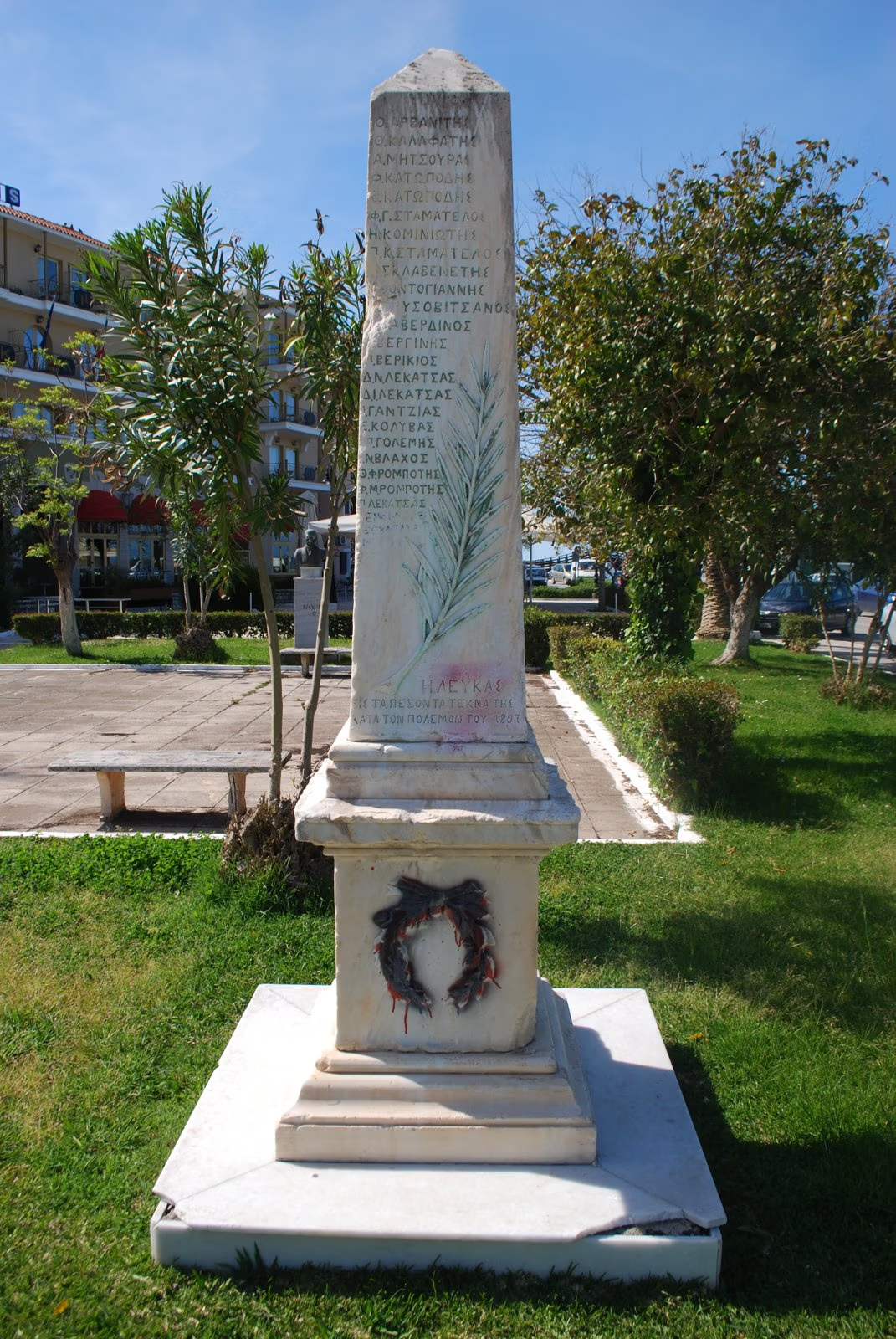
Surnames repeat down the stone. Five men named Ktenas, four named Konidaris, three named Kourtis and two named Therianos are listed. The names as transcribed, transliterated into Latin script and kept in their Greek alphabetical order:
- Alexiou Ilias
- Aravanis Nikolaos
- Verykios Konstantinos
- Vlassopoulos Stavros
- Vlachos Spyridon
- Georgakis Dionysis
- Gourzis Thomas
- Grapsopoulos Georgios
- Grigoris Gerasimos
- Delaportas Georgios
- Zakynthinos Zois
- Therianos Angelos
- Therianos Aimilios
- Thermos Xenofon
- Kavadias Dimitrios
- Kakiousis Konstantinos
- Karydis Spyridon
- Katopodis Christos
- Kongas Apostolos
- Konidaris Andreas
- Konidaris Dimitrios
- Konidaris Dionysios
- Konidaris Ioannis
- Kourtis Michail
- Kourtis Pantazis
- Kourtis Christogiannis
- Ktenas Ilias
- Ktenas Spyridon
- Ktenas Stefanos
- Ktenas Charalampos
- Ktenas Charilaos
- Livitsanos Leonidas
- Maniakis Konstantinos
- Messinis Charalampos
- Mitsouras Nikolaos
- Mikronis Spyridon
- Benias Gerasimos
- Boursinos Gerasimos
- Papadopoulos Ilias
- Petalas Dimitrios
- Robotis Spyridon
- Rontogiannis Ioannis
- Soldatos Dionysios
- Soumilas Christoforos
- Steriotis Antonios
- Tsinavos Spyridon
- Fatouros Themistoklis
- Filippas Panos
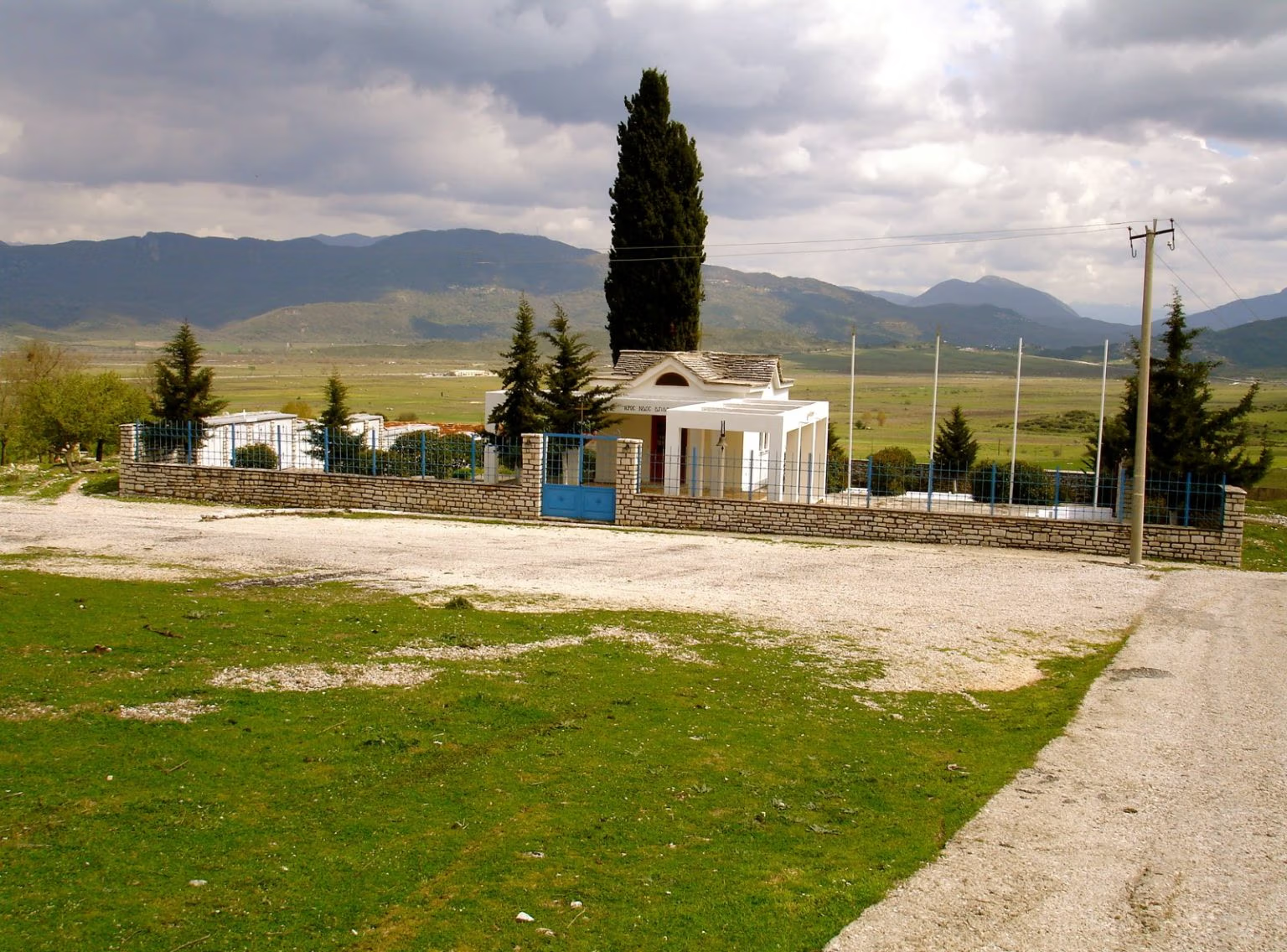
Three of these men lie in the Greek military cemetery at Vouliarates (Bularat), six kilometres inside Albania. A field surgical hospital of 300 beds stood there and treated Greek wounded. Their stories were gathered by Aroma Lefkadas from family accounts and from the village newspaper of Drymonas (Aroma Lefkadas).
Konstantinos Verykios, son of Georgios, was born in Drymonas in 1919 and finished at the gymnasium in Lefkada town with a mark of 9.6 out of 10 in 1936.
That autumn he sat the entrance examination for the Higher School of Agriculture in Thessaloniki and missed a place; a student would have been deferred from service.
As a warrant officer of the 40th Evzone Regiment he fell on 2 December 1940 on the height of Bourato, 1,488 metres, at the Kakavia pass.
His bones are the only ones kept inside the cemetery’s church, because, the family account says, he was the first of its dead to fall. His name is also on the memorial in the square at Drymonas.
Major Zois Zakynthinos, son of Efstathios, was born in Karya in 1893 and had served in the First World War and in Asia Minor.
In 1940 he was deputy commander of the 12th Infantry Regiment. On 3 December, on height 1160, Platovouni, near Grapsi west of Kakavia, an artillery shell killed him at the end of a battle already decided in the Greeks’ favour. His half-brother Panos, fighting nearby, ran to him; the major died in his arms, and Panos buried him there. In 1974 Panos went to Albania to bring the bones home and was refused by the Albanian authorities.
On 5 June 1999 a shepherd from Georgoutsates, Theodoros Kyrou, led Greek officers to the grave. The major now lies in an individual grave at Vouliarates, and a street in Karya carries his name.
Antonios Steriotis, son of Epameinondas, a private of the 8th Anti-tank Battery, fell on 24 February 1941 at Bularat, west of Kakavia. The local account records little more about him. Agathoklis Panagoulias, searching for the families of the cemetery’s dead, traced his brother, then living in Kypseli in Athens.
The Lefkadians at the front
Verykios fell five weeks after Grazzi rang the bell in Kifisia, on a mountain the Greek army had reached only because the position at Elaia held. Steriotis fell four months after it. Their names stand on the Lefkada waterfront because a refusal given at three in the morning was carried out, in the end, by men from villages like Drymonas and Karya.
Further Reading
Greek titles are given in the original, with the English in square brackets. English translation by Othisis.
Presidency of the Hellenic Republic, Β΄ Παγκόσμιος Πόλεμος [Second World War].
Library of the Hellenic Army History Directorate (DIS/GES), online catalogue.
References
Grazzi, E. Il principio della fine: l’impresa di Grecia. Rome, 1945. Greek translation quoted in I. Daskarolis, Istorika Themata, 27 October 2016, transcribed from DIS/GES, Ο Ελληνο-ιταλικός Πόλεμος 1940-41 [The Greek-Italian War 1940-41].
ETFL. Η στρατιωτική διάσταση της 28ης Οκτωβρίου 1940 [The military dimension of 28 October 1940].
Hellenic Army. Μάχη Πίνδου, Ελαίας, Καλαμά [Battle of Pindus, Elaia, Kalamas].
Presidency of the Hellenic Republic. Β΄ Παγκόσμιος Πόλεμος [Second World War].
Katsimitros, Ch. Η Ήπειρος προμαχούσα [Epirus in the Forefront]. Athens, 1950. Quoted via Mixani tou Chronou.
Themata Stratiotikis Istorias. Μάχη Πίνδου, Ελαίας, Καλαμά [Battle of Pindus, Elaia, Kalamas].
Hellenic Army General Staff. General mobilisation order, 28 October 1940.