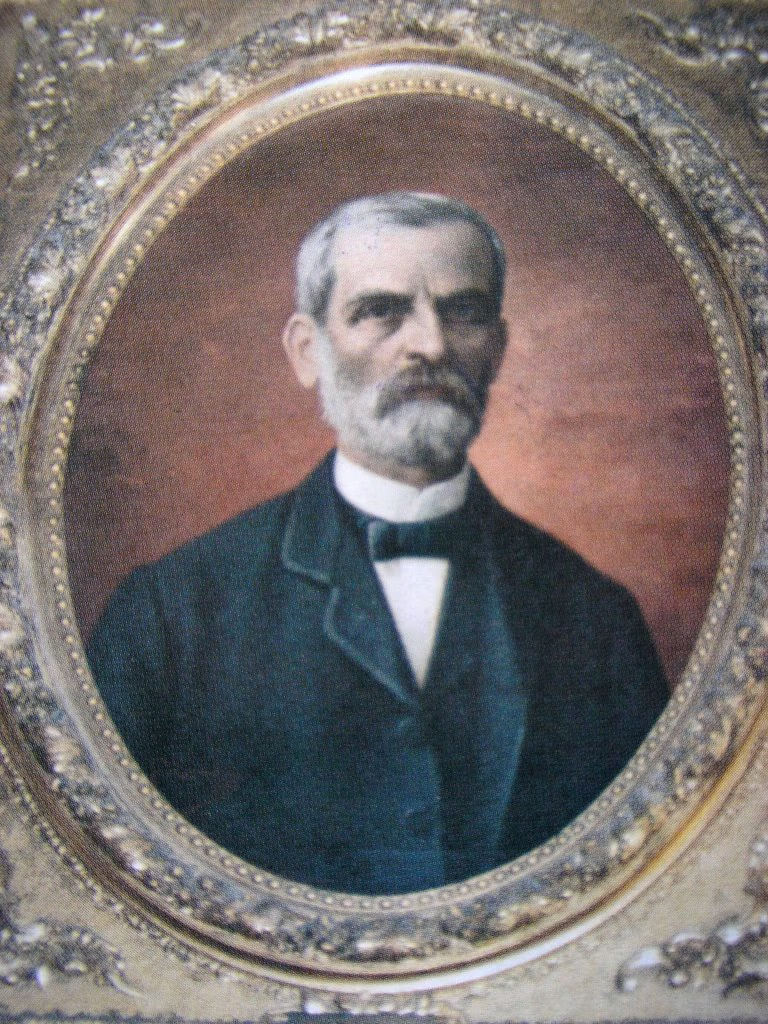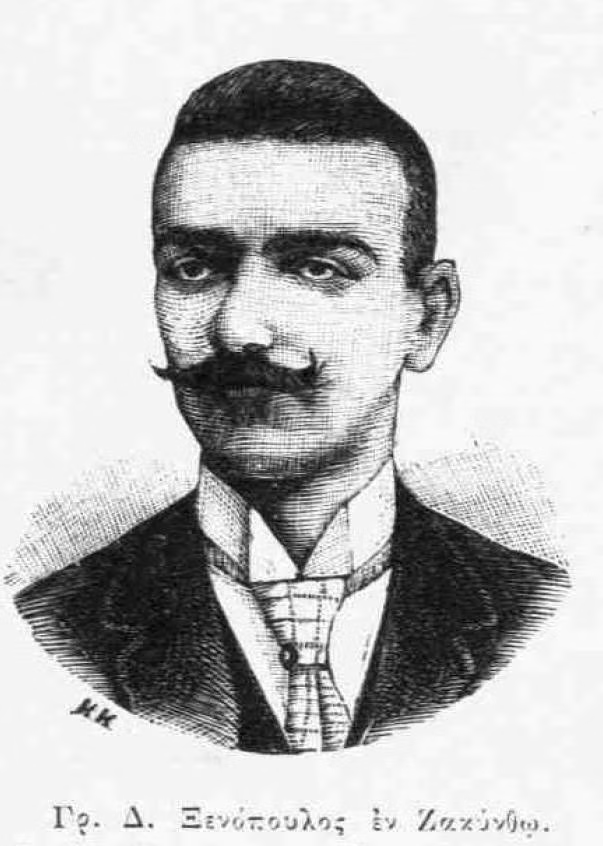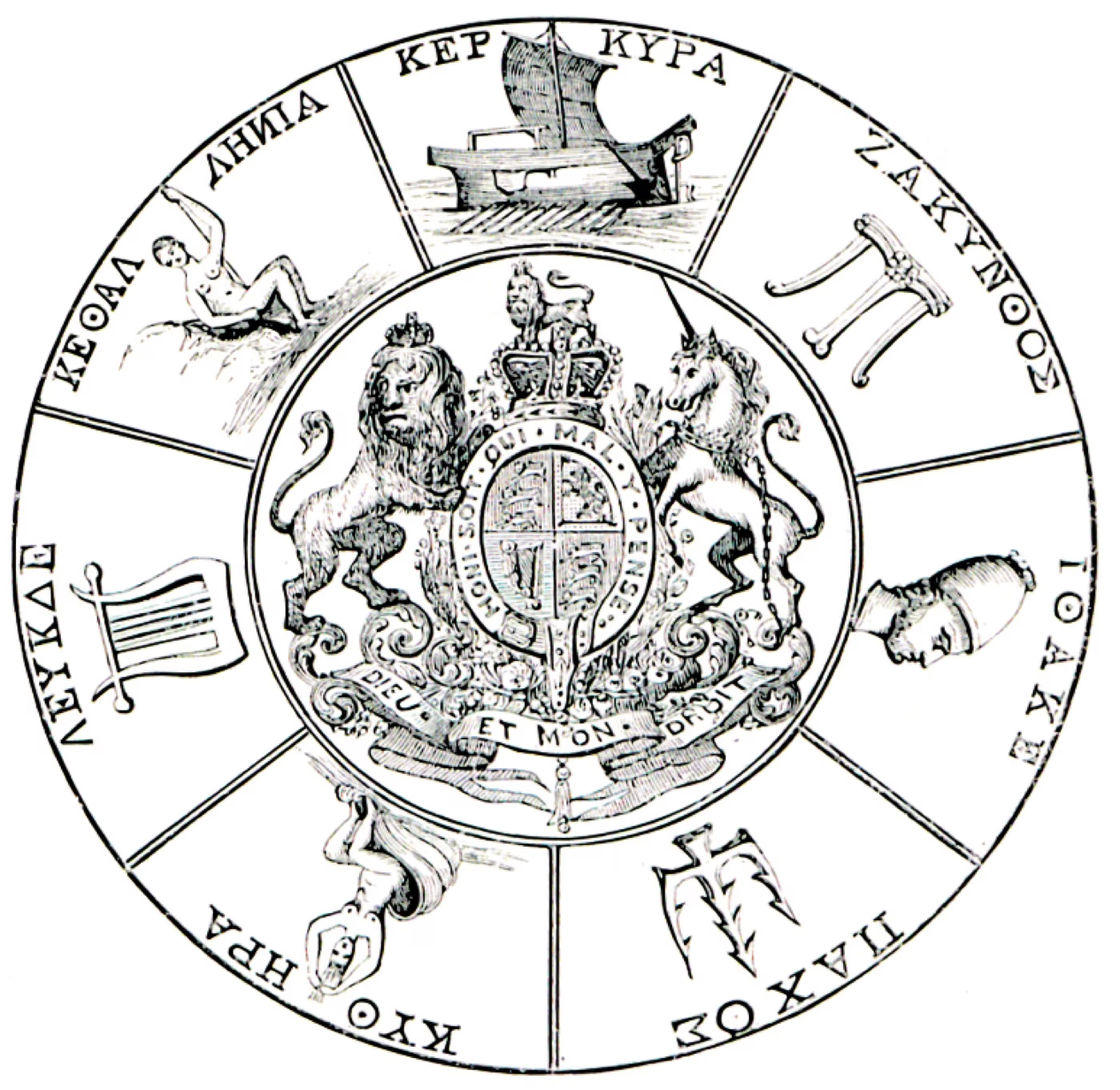
The 1862 vote that shows Lefkada before Union
“The Ionian Islands shall be united to the Kingdom of Greece.”
Treaty of London, 1864
On 6 and 7 February 1862, Lefkada’s electors chose representatives to the Ionian Parliament. British protection and the demand for Union with Greece remained unresolved. Gerasimos Servos placed first, Aristotelis Valaoritis fifth, and Ioannis Marinos failed to win a seat. The result catches local politics before its ending was known.
A state under British protection
The United States of the Ionian Islands was formed after the Napoleonic Wars and operated under British protection. It had its own institutions, including a parliament in Corfu, but the Protectorate set firm limits on political autonomy. Lefkada participated through elected representatives. Their mandate belonged to the Ionian state; the parliament of the Kingdom of Greece was a separate institution.
The earlier Septinsular Republic lasted from 1800 to 1807 and was a different state. The political field in which Valaoritis, Marinos and Servos acted was the later British-protected Ionian order. Union in 1864 replaced that constitutional framework.
The Ionian Parliament provided a place for petitions, disputes and public argument under bounded sovereignty. Representatives could seek administrative reform or advocate the end of the political bond with Britain. These were distinct courses. The difference between reforming the Protectorate and abolishing it shaped the final years of the state.
Reform or Union
William Gladstone travelled to the Ionian Islands in 1858 to examine the political crisis and possibilities for constitutional reform. His mission showed the seriousness with which the question was treated in Britain. Unionists still found a British programme of reform inadequate.
The disagreement concerned the remedy. If greater Ionian self-government within the Protectorate was the aim, constitutional changes could be negotiated. If the objective was Union with Greece, an improved Protectorate could still appear inadequate. The two answers coexisted and competed in the islands’ public life.
A Lefkadian historical reconstruction reports that Valaoritis, Marinos and Servos opposed the proposed reforms because their objective was Union with Greece. It attributes the position to the three together; no speech in which Servos states it himself has been found. The same local source names only Valaoritis and Marinos on the committee that prepared an 1859 petition to Queen Victoria.
Six names in a reported 1861 memorandum
For 1861, the same historical tradition records a more specific act. Six Lefkadian deputies reportedly addressed a memorandum to the British Colonial Secretary, the Duke of Newcastle: Theodosios Soundias, Dimitrios Kontaris, Gerasimos Servos, Efstathios Filippas, Aristotelis Valaoritis and Ioannis Marinos.
The list places Servos in a named collective intervention before the final decision on Union. It also resists the idea that the change was the work of one personality. The memorandum itself has not been traced, so its wording is known only through that local account.
These names also show how local representatives could cooperate on one issue and compete in an election. A common memorandum records a joint act. Whether the six shared identical ideas, electoral networks or ties to the earlier Radical movement remains unproved. Questions about authorship and individual emphasis require the document itself.
The 1862 ballot
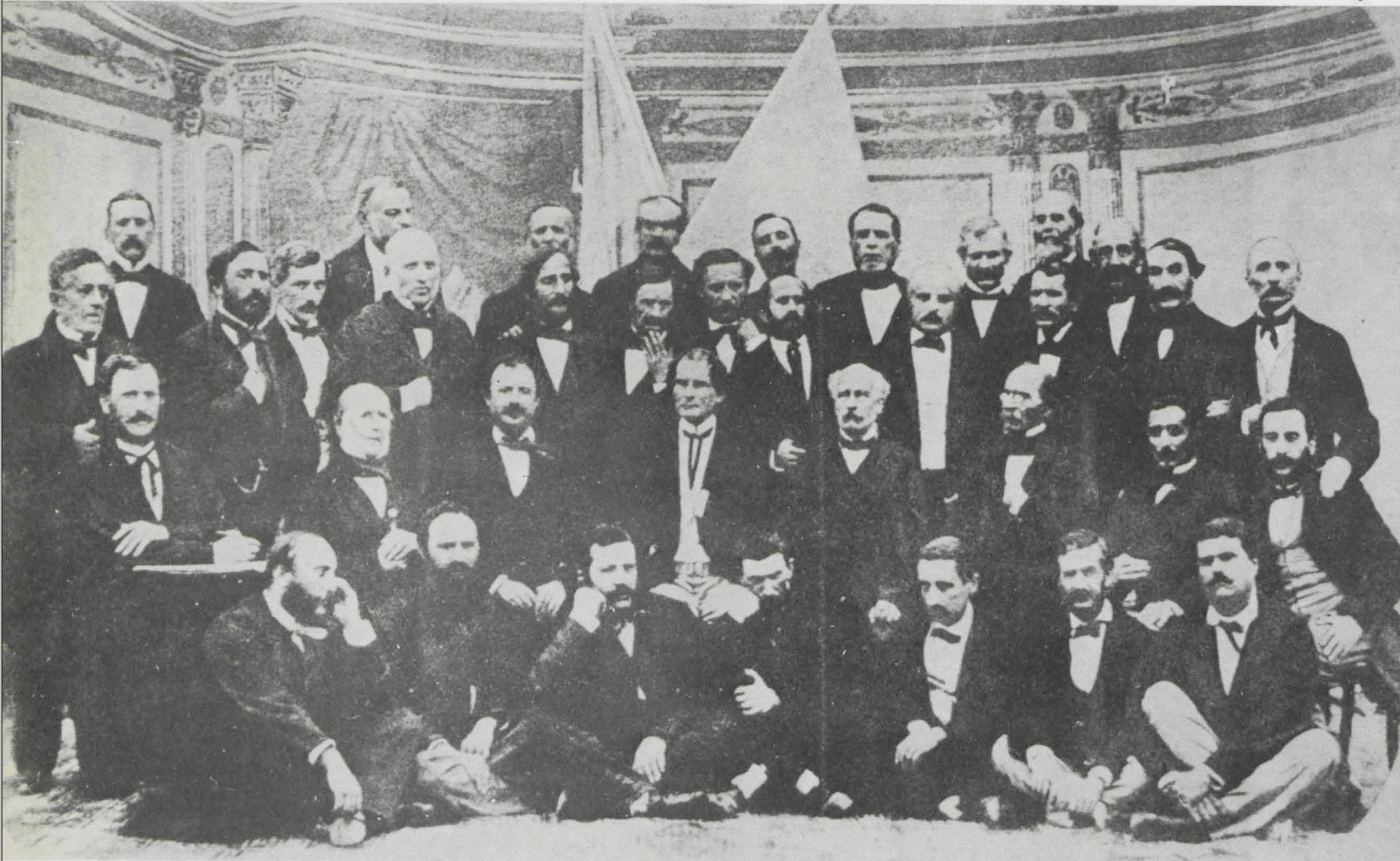
The Hellenic Parliament’s historical volume Lefkadians preserves the figures for the election of 6 and 7 February 1862. It cites the official Ionian Gazette, issue 564 of 3/15 February, page 9. The poll involved 1,961 electors. Servos received 1,393 votes, Georgios Kalkanis 1,321, Evangelos Tzarlambas 1,320, Efstathios Filippas 1,168, Valaoritis 1,094 and Dimitrios Kontaris 1,048. These six were elected. Marinos received 821.
Servos’s result is evidence of strong local support at that moment. Valaoritis’s broader political and literary importance lies beyond his fifth-place result, and the initiatives attributed to Marinos in 1859 and 1861 remain part of his record. This was a multi-seat election shaped by candidate preference, alliances and local circumstances. A simple unionist versus anti-unionist referendum would misdescribe it.
The vote belonged to the twelfth Ionian Parliament. Placing Servos’s 1,393 votes in a Greek election after 1864, as one derivative biography does, removes the constitutional setting that gives the result its meaning.
Decision, treaty and transfer
The thirteenth Ionian Parliament decided in favour of Union on 23 September 1863. That decision came before the international treaty and before the administrative transfer was complete. The Treaty of London was signed on 29 March 1864. Union took effect on 21 May, when British protection ended and the Ionian Islands entered the Greek state.
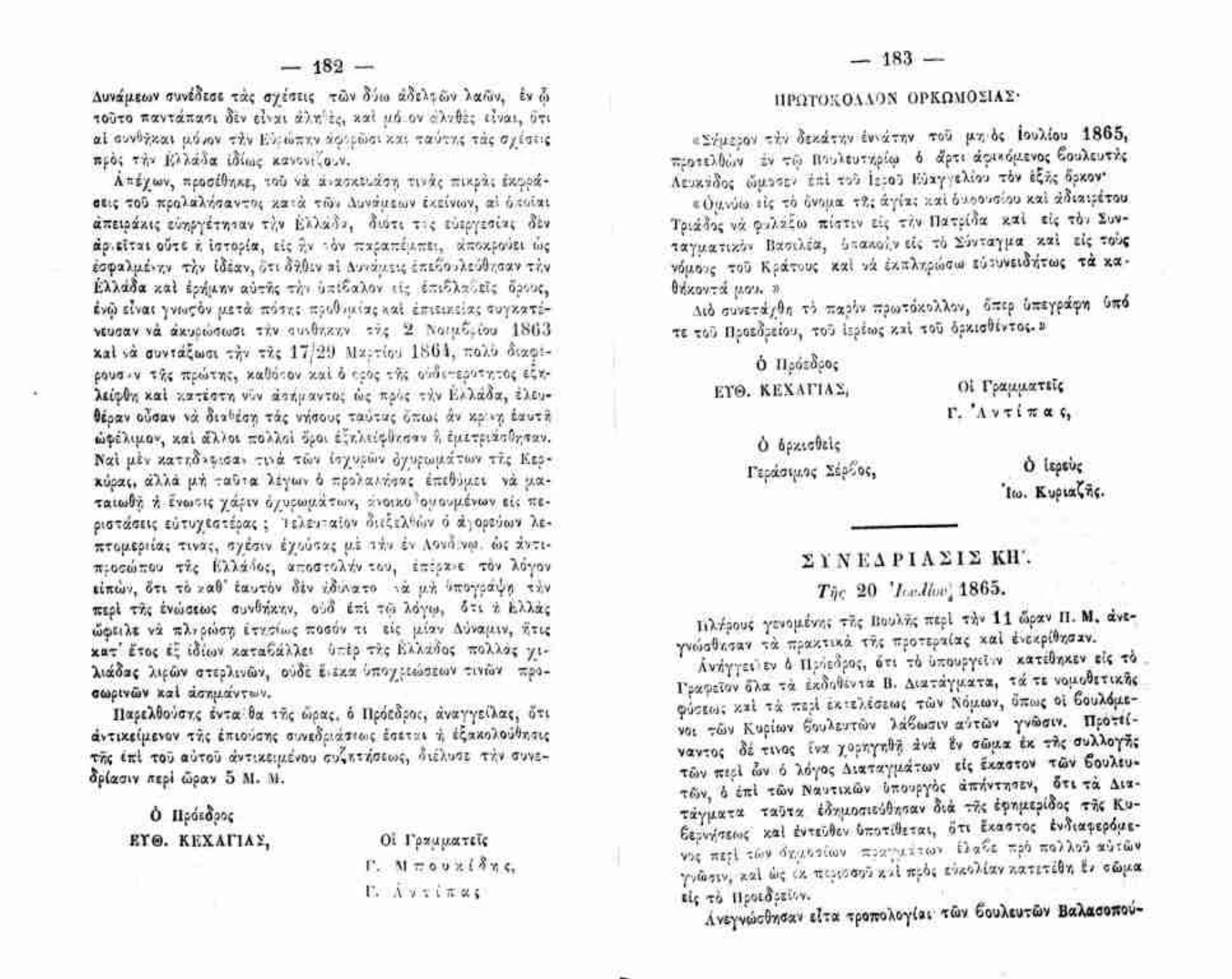
The next questions were practical. Lefkada needed representation in the Greek state; laws, education and administration had to be reconciled with a national system developed elsewhere. A small record marks the passage. The 1865 proceedings of the Hellenic Parliament include an oath protocol bearing Servos’s name. A man who had competed for a place in the Ionian Parliament was now entering the Greek legislature.
Researching this period requires the same change of frame. Ionian gazettes carry elections before 1864; Greek parliamentary records carry later service. Joining names across those archives without preserving the constitutional break produces easy errors. Lefkada’s route to Union is clearest when reform proposals, local alignments, a dated vote, a treaty and administrative incorporation remain distinct.
Further Reading
- Lefkadians, Hellenic Parliament, for the local representatives and election evidence.
- Constitutional history, Hellenic Parliament, for the institutional context of the transfer.
- Proceedings of the Hellenic Parliament, 1865 to 1866, for the oath protocol after Union.
References
Hellenic Parliament, Lefkadians, pp. 76–84, especially pp. 78–79; Official Gazette of the United States of the Ionian Islands, no. 564, 3/15 February 1862, p. 9, as cited in that volume.
Hellenic Parliament constitutional-history publication, for the decision of 23 September 1863; Greek Ministry of Foreign Affairs conventions register, for the Treaty of London date; Hellenic Parliament historical note, for implementation on 21 May 1864.
Aroma Lefkadas, attributed local reconstruction of the Gladstone-era response, 1859 petition and 1861 memorandum.