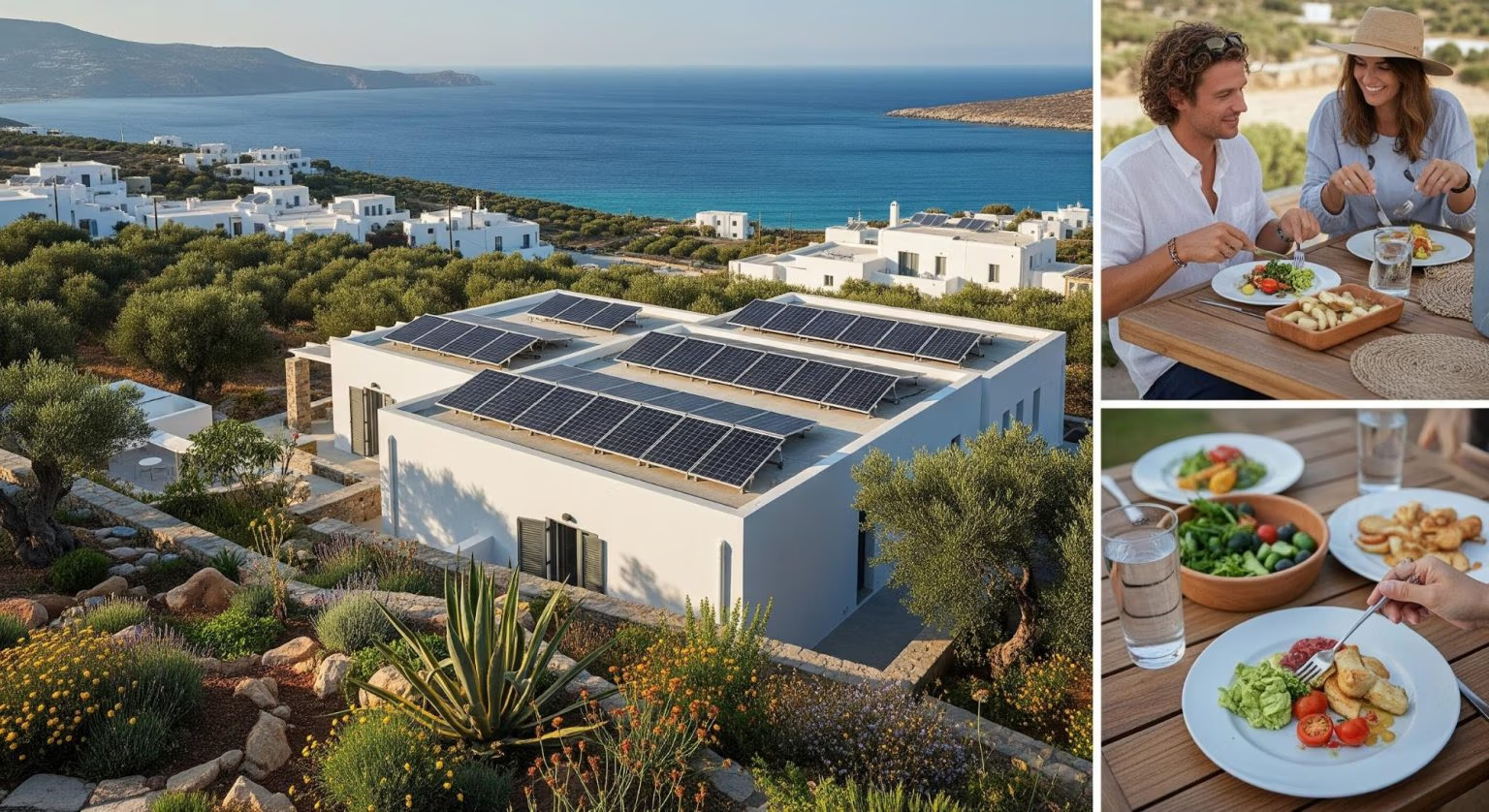
Greece’s Tourism Plans Face the Local Delivery Test
Current strategies, consultation proposals and the implementation test
The Greek Tourism 2030 study recommends spreading visitor activity across more regions and seasons. The draft Special Spatial Framework for Tourism published for consultation in May 2026 addresses land-use planning. Both concern how tourism grows, but a strategy and a consultation text do different jobs.
Strategic priorities
The Greek Tourism 2030 study, prepared for INSETE, recommends spreading tourism across more regions, seasons and products. It also identifies infrastructure, water, waste, energy, transport, skills and destination management as conditions for that change.
The direction is clear: reduce dependence on a small number of peak destinations, lengthen the operating season where local conditions support it and connect tourism more closely to culture, nature and local production.
The 2026 planning proposal
In May 2026, the Ministry of Environment and Energy published a draft Special Spatial Framework for Tourism for consultation. The consultation closed on 25 May. The document records proposed planning rules, whose legal effect depends on publication of an adopted text.
Infrastructure and implementation
Marketing can redirect some demand. Infrastructure and land-use control determine whether a longer season can function. Transport, water, wastewater treatment, waste collection, housing and services must operate outside the peak months.
Implementation should therefore be tested against visible outcomes:
- A smaller gap between peak and off-season activity where year-round operation is viable.
- Investment in water, wastewater, waste and transport before capacity fails.
- Planning enforcement in areas exposed to dense development.
- Longer stays and local spending alongside protected housing supply and public access.
- Published destination indicators that residents can examine.
Extended Read
Continue with Local Outcomes Define Higher-Value Tourism.
Further Reading
References
More from the journal
Lefkada’s Ionian Architecture: History, Materials and Earthquakes
Lefkada’s distinct history, town plan and earthquake-adapted buildings
Booking.com: what has changed, and what Greece will decide
Karya and Englouvi Outside Summer
Karya, Englouvi and their documented off-season traditions