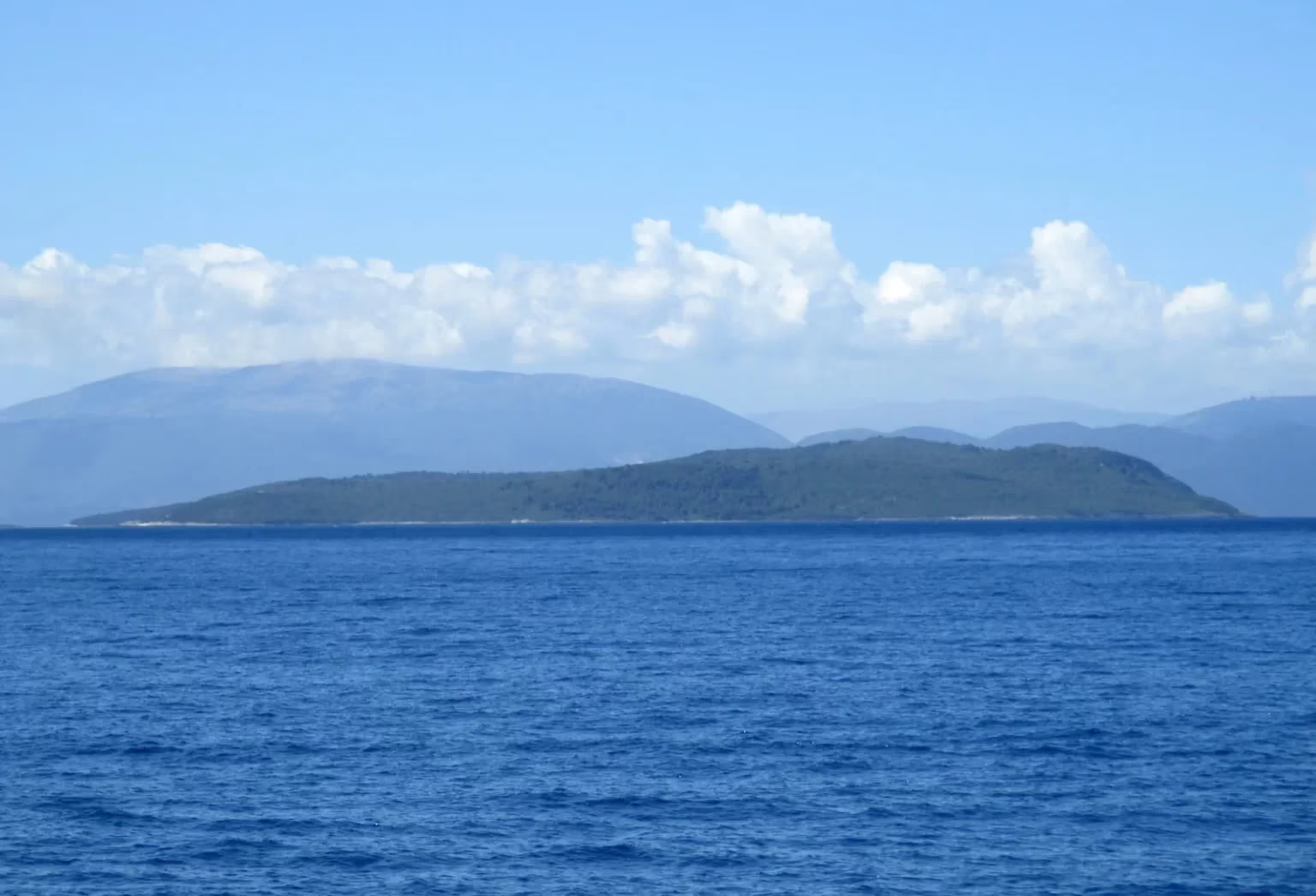
Arkoudi’s Posidonia Pilot: Restoration Under Anchoring Pressure
“the process of actively or passively assisting the recovery of an ecosystem”
Regulation (EU) 2024/1991, Article 3(3)
Between Lefkada and Ithaca, the uninhabited islet of Arkoudi has become the site of a small but consequential experiment: can a damaged meadow of Posidonia oceanica be helped to recover, and can that recovery survive the same anchoring pressure that caused the damage?
The question matters far beyond one Ionian bay. In September 2026, European countries entered the next phase of the EU Nature Restoration Regulation by submitting draft national plans for assessment. Arkoudi shows what those continent-scale commitments look like when they meet a real seabed: individual shoots, a measured patch of dead substrate, years of monitoring, and rules that boat users must follow if restoration is to last.
Two thousand shoots, one deliberately bounded test
The environmental organisation iSea describes the Arkoudi work as a three-year pilot carried out with the Mediterranean Sea and Coast Foundation. Its stated target is to restore at least 200 square metres of dead Posidonia substrate, known as matte morte, using shoots that had already been detached by anchoring or natural causes.
According to the project’s current results page, at least 2,000 detached shoots have been transplanted over 200 square metres inside the Natura 2000 area of the Inner Ionian Archipelago. Monitoring is planned through 2028, with researchers tracking the number and density of surviving shoots and using the results to refine future restoration methods.
Transplanting shoots is a recorded intervention, not yet evidence that the meadow has recovered. Survival and density measurements through 2028 will show how the treated plot develops.
Why anchoring is the decisive pressure
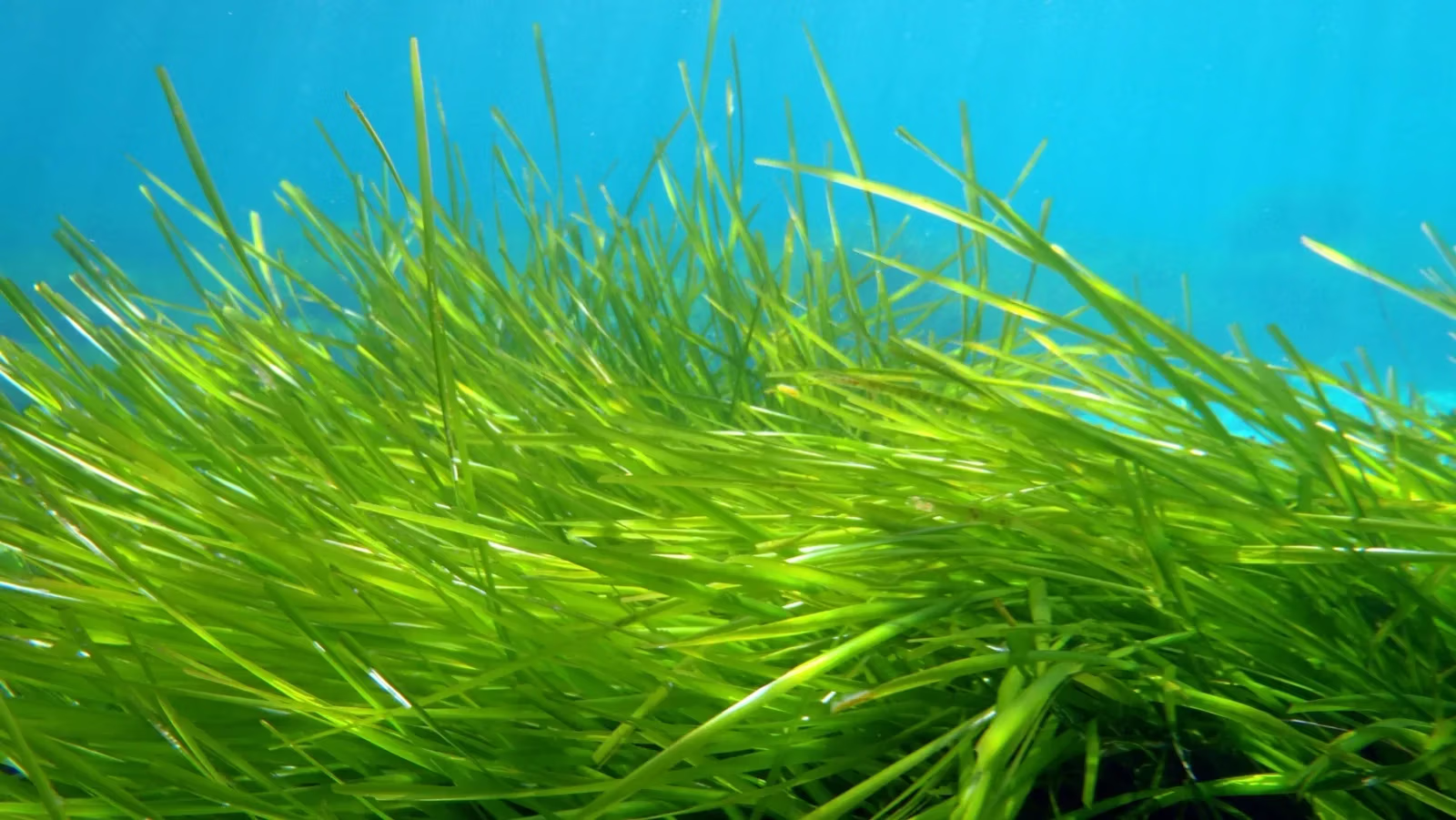
Posidonia oceanica is a flowering seagrass found only in the Mediterranean, not an alga. Its meadows shelter marine life, support fisheries, store carbon in their biomass and sediments, filter water, and help protect coasts from erosion. Those services depend on a structure that grows slowly and can be physically torn apart quickly.
iSea’s earlier mapping and field work identified heavy boat concentration and anchoring as a principal pressure around Arkoudi. In a study summary published on 4 July 2025, iSea reported 409 boat observations around Arkoudi, Atokos and Formicula; 60 percent were anchored over Posidonia. Arkoudi accounted for 13.9 percent of the recorded vessel activity, behind Atokos and Formicula.
These observations show where boats concentrated during the surveys; they are not a full-season count and do not measure damage from each anchor. iSea also cautions that limited sampling may underestimate the pressure. The findings support targeted prevention, while leaving the extent of damage to be measured separately.
Restoration cannot outrun continuing damage
iSea identifies uncontrolled anchoring as a major pressure on Arkoudi’s seagrass. Preventing further damage is therefore part of the restoration problem. If anchors continue to drag through living meadow or newly treated plots, transplantation becomes a costly cycle of repair without ecological recovery.
For the Ionian’s sailing economy, nature and navigation are not opposing interests. The protected habitat needs to be legible through clear local information, reliable charts, ecological moorings where appropriate, and enforceable no-anchor areas over sensitive seabed. Restoration works best when the cause of loss is reduced at the same time.
Arkoudi inside Europe’s restoration timetable
The EU Nature Restoration Regulation sets an overarching target for restoration measures to cover at least 20 percent of the Union’s land and at least 20 percent of its sea areas by 2030, with all ecosystems in need of restoration addressed by 2050. Its marine provisions require Member States to improve damaged habitat types and re-establish them where necessary.
On 1 September 2026, the European Commission reported that draft national restoration plans had entered assessment. The plans are meant to explain how countries intend to meet targets to 2030 and to give a strategic view toward 2040 and 2050. Final plans are due after Commission and European Environment Agency observations.
Arkoudi does not, by itself, fulfil a national target. Its value is methodological. It binds a place, a baseline, a bounded intervention and a monitoring period. If the survival data are published clearly, the pilot can help answer the questions that larger plans often leave abstract: which techniques work in this seabed, at what cost, under what protection regime, and with what confidence?
A landscape larger than the test plot
The Natural Environment and Climate Change Agency describes the Inner Ionian Archipelago as important habitat for cetaceans, Posidonia meadows and the endangered fan mussel. The wider area is also used by Mediterranean monk seals, sea turtles and seabirds. A 200-square-metre restoration plot is therefore small in area but connected to a much larger ecological network.
That wider setting also changes what success should mean. Survival of transplanted shoots is one measure. Reduced anchoring damage, improved compliance, continued habitat mapping and public access to monitoring results are others. A project can succeed technically and still fail strategically if the surrounding pressure remains unchanged.
What to watch through 2028
The most useful future updates will be specific. Readers should look for survival and density trends, the timing and method of each survey, comparison with untreated reference areas, evidence of new growth, and any changes to anchoring management around the site. Negative or mixed results would be valuable too: they would prevent ineffective methods from being scaled elsewhere.
Arkoudi’s pilot is a long test of whether damaged living systems can recover while the pressure that damaged them remains active. The transplanted shoots are the intervention. Survival through 2028, and the protection around them, will be the evidence.
Further Reading
- iSea: Arkoudi pilot restoration project and current results
- iSea: Arkoudi restoration project and guidance for boat users
- EUR-Lex: Regulation (EU) 2024/1991 on nature restoration
- Natural Environment and Climate Change Agency: Inner Ionian Archipelago
References
- iSea. Arkoudi pilot restoration project and current results. Accessed 7 September 2026.
- iSea. Pilot restoration of Posidonia meadows in the Inner Ionian Archipelago. Accessed 7 September 2026.
- iSea. Drone study of anchoring pressure in ecologically sensitive Ionian areas. 4 July 2025.
- European Parliament and Council. Regulation (EU) 2024/1991 on nature restoration. 24 June 2024.
- European Commission. EU countries submit draft plans for restoring nature. 1 September 2026.
- Natural Environment and Climate Change Agency. Inner Ionian Archipelago: ecological importance and threatened species. Accessed 7 September 2026.
- Marcou, Melina. Posidonia oceanica photograph. RECONNECT project, via Wikimedia Commons. CC BY-SA 4.0.
More from the journal
Nydri After Summer: Buses Keep Running, but Boats and Opening Hours Need Dated Checks
Resident infrastructure, dated services and the checks that cannot be skipped
Greece’s Tourism Plans Face the Local Delivery Test
Current strategies, consultation proposals and the implementation test
Local Outcomes Define Higher-Value Tourism
How to assess length of stay, local spending and resource pressure