Kalymnos: how climbing made October the busy month, and who pays to keep the bolts safe
On Kalymnos the busiest month for climbers is October, when most Greek beach islands are emptying. The guidebook authors call October peak season and mid-October to late November “usually perfect”. That calendar was built on purpose. From 1999 the municipality backed bolting, a free guidebook and festivals. It has paid less steadily for the upkeep, and in March 2026 a climber died when old hardware failed.
43 routes in 1997, a meeting with the mayor in 1999
The Italian climber Andrea di Bari came to Kalymnos on holiday in 1996, returned in May 1997 and opened 43 sport routes in the Arhi, Odyssey and Poets sectors. Articles in the magazines Alp and Rotpunkt followed in 1999 (Climb Kalymnos). That year the Greek mountain guide Aris Theodoropoulos went to the mayor. At the meeting they agreed three priorities: count the existing routes, bolt more, and publish a guidebook. They found 180 routes already in place (Climbing Initiative, 2020).
The island needed the trade. Rockfax’s guide describes Kalymnos as one of the first casualties when package tourism to the area slowed, at about the time the first climbers arrived (Rockfax).
Festivals as the municipality’s tool
The first international climbing event, in October 2000, drew 180 climbers from 13 countries. The first guidebook, a thin brochure, was paid for by the local council and given away free. An estimated 4,000 climbers visited in 2001 and 2002. The 2004 festival, run by the municipality and Theodoropoulos, drew more than 600, and the 2006 Petzl RocTrip about 1,000 (Climb Kalymnos). Festivals were held in October or May.
A season that runs opposite to the beaches
Climbers come mainly in autumn and spring, and the guidebook calls summer workable only in the shade (Climb Kalymnos). The Climbing Initiative’s 2019 field study, based on interviews, concluded that climbing had “dramatically extended the tourism season”. It also notes that nobody knows how many climbers come, and that the municipality does not count Airbnb rooms beside the island’s roughly 3,500 hotel and studio beds (Climbing Initiative). A 2017 University of the Aegean thesis counted more than 1,200 routes and 77 crags (Trikoili, 2017).
Maintenance fell to volunteers, until a fatal accident
The Climbing Initiative found that the municipality funded festivals but not regular bolting or maintenance, which fell to volunteers (Climbing Initiative). The guidebook authors give the history: municipal rebolting from 2000 to 2010, little support from 2010 to 2015, an EU-funded programme in 2015 that rebolted nearly 300 routes, then the climbers again. Since 2010 they have put at least €5,000 a year from guidebook sales into hardware. In March 2026 a fatal accident caused by ageing hardware led them to discourage new routes and rebolt with titanium glue-in bolts (Climb Kalymnos).
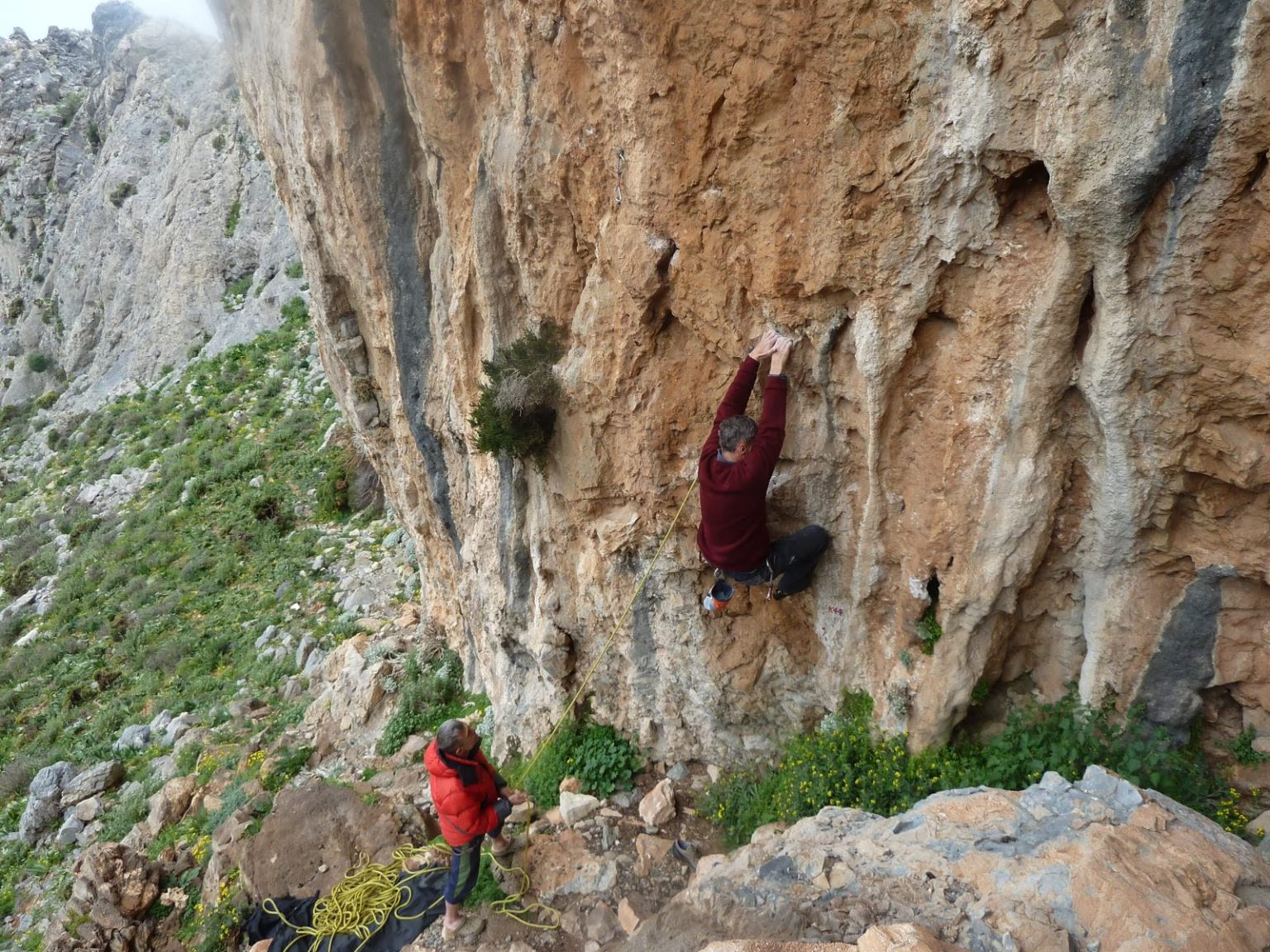
Featured image: climbing on Kalymnos, 31 March 2011. Photograph by alpguide, via Wikimedia Commons (from Flickr), CC BY-SA 2.0. Resized for web.
Further Reading
- The Climbing Initiative. The Impact of Rock Climbing on Kalymnos, February 2020.
References
- Aris Theodoropoulos and Katie Roussos. Climb Kalymnos: Climbing (guidebook authors’ site), read 16 October 2026.
- The Climbing Initiative. The Impact of Rock Climbing on Kalymnos, case study, February 2020 (copy on DocsLib).
- Rockfax. Kalymnos guidebook introduction.
- Angeliki Trikoili. Η συμβολή του εναλλακτικού τουρισμού στην ανάπτυξη νησιωτικών περιοχών: η περίπτωση του αναρριχητικού τουρισμού στην Κάλυμνο, University of the Aegean, 2017.