The Ionian State Before Union Under British “Protection”
In 1815, one treaty called the seven islands “a single, free, and independent State” and placed that state under Britain’s “immediate and exclusive protection.”
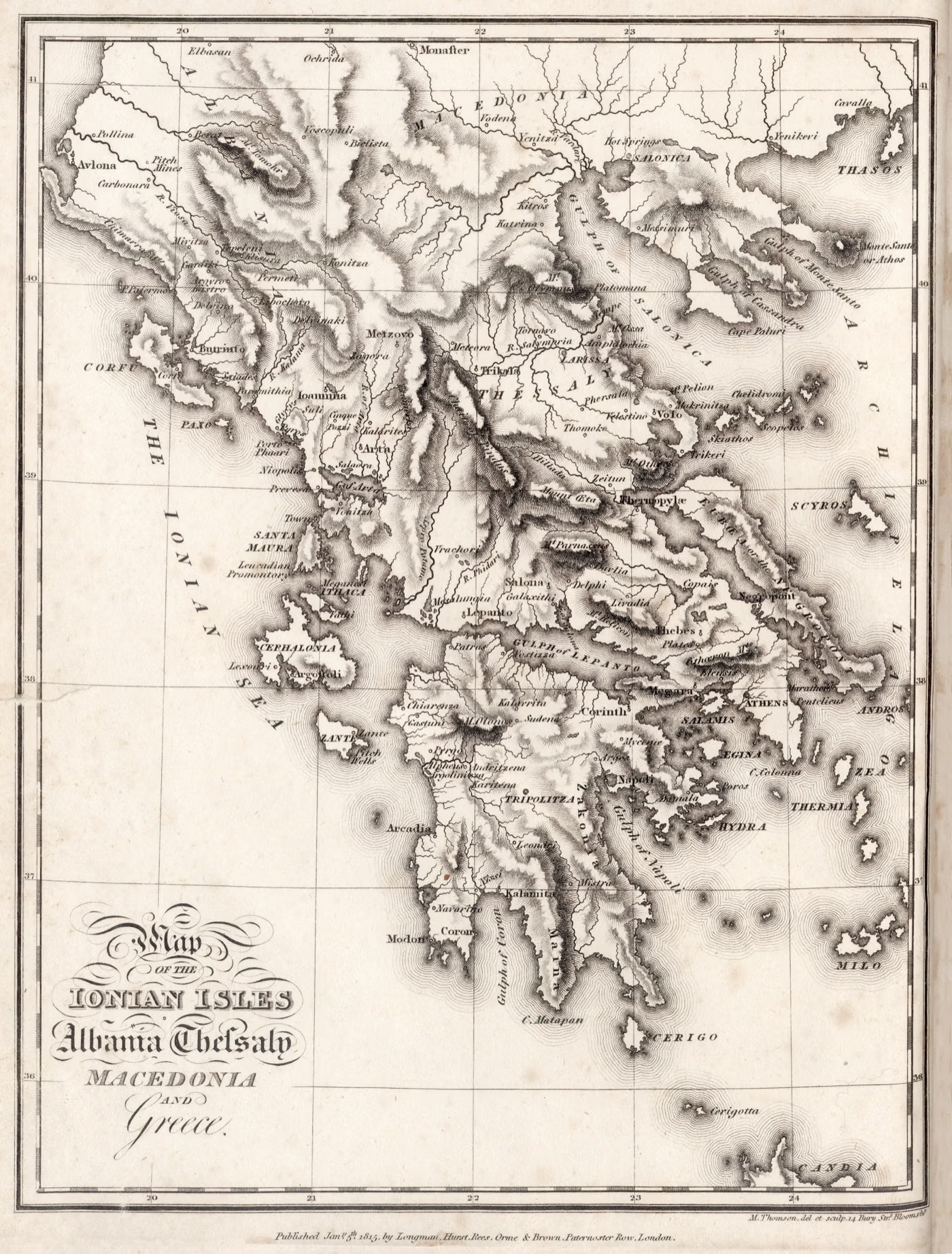
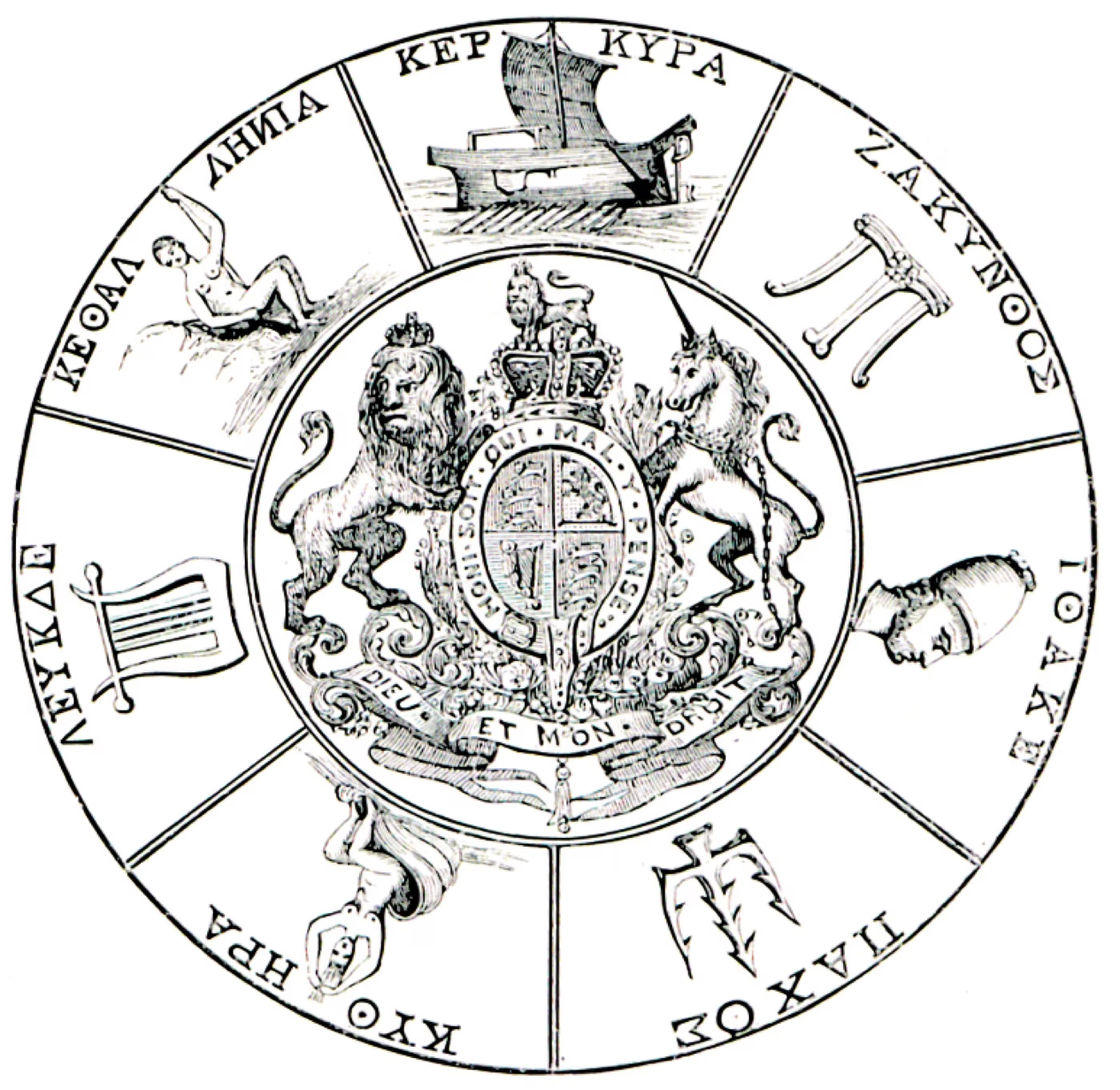
From 1815 to 1864, Corfu, Cephalonia, Zakynthos, Lefkada, Ithaca, Kythira and Paxos formed the United States of the Ionian Islands. The state had a treaty name, flag, Senate, Legislative Assembly, courts and treasury. The same constitutional order gave Britain control over defence, foreign representation and decisive stages of lawmaking.
Two clauses, one political arrangement
Article I of the Treaty of Paris respecting the Ionian Islands, signed on 5 November 1815, named the seven islands and their dependencies as one state. Its language of freedom was explicit. Article II immediately qualified it by establishing Britain’s exclusive protection.
Britain appointed a Lord High Commissioner. The Commissioner convened and directed the Assembly that prepared the constitutional charter, and the British Crown had to ratify it. Britain could occupy the fortresses and command the military. Ionian applications abroad passed through the Commissioner and British diplomatic channels.
A government that existed
The 1817 Constitutional Charter made Corfu the seat of government and vested executive authority in a six-member Senate. A 40-member Legislative Assembly contained 11 “integral” members and 29 elected members. The charter also addressed courts, local administration, religion, public finance and language. Greek was established as the language of the state, with Italian retained during a transition.
These institutions conducted substantive public business through debate, administration, taxation and legislation. Each island also retained a local political identity within the federation. The state used symbols of its own, maintained a treasury and appeared in treaty and commercial practice under its own name.
Representation, however, was narrow. The original electoral system worked through noble electors known as the synclitae and controlled lists. Parliament met for short, infrequent sessions, and the British sovereign in council could dissolve it. These elections fell far short of broad democracy.
Where self-government stopped
The path of an Ionian bill shows the limits more clearly than the state’s ceremonial language. A measure approved by the Legislative Assembly still required the Senate and the sanction of the Lord High Commissioner. Even after enactment, the British sovereign could cancel an Ionian law by Order in Council within one year.
Defence belonged to Britain. Foreign approaches were routed through British institutions. “High police” powers were exercised through the Commissioner and British military command. Key financial decisions, including stipulated garrison costs, reached into the Ionian treasury.
Later historians have used colonial analysis to explain this practice, while the treaty’s formal category remained a protected state. “Protected state with colonial features in practice” keeps both parts of the record visible when the analysis is attributed and explained.
Reform from inside the system
Reformists sought civil liberties, a freer press, changes to administration and broader elections while treating union with Greece as a longer-term objective. Radicals rejected the protectorate more directly and demanded union.
Reforms in 1849 widened participation and introduced direct election of Assembly members. A British government account given to the Commons in 1852 claimed that the electorate had increased from about 1,500 to 6,000. The figures belong to that attributed contemporary account. The protectorate and its veto points survived the wider franchise.
The treaties and vote that produced union
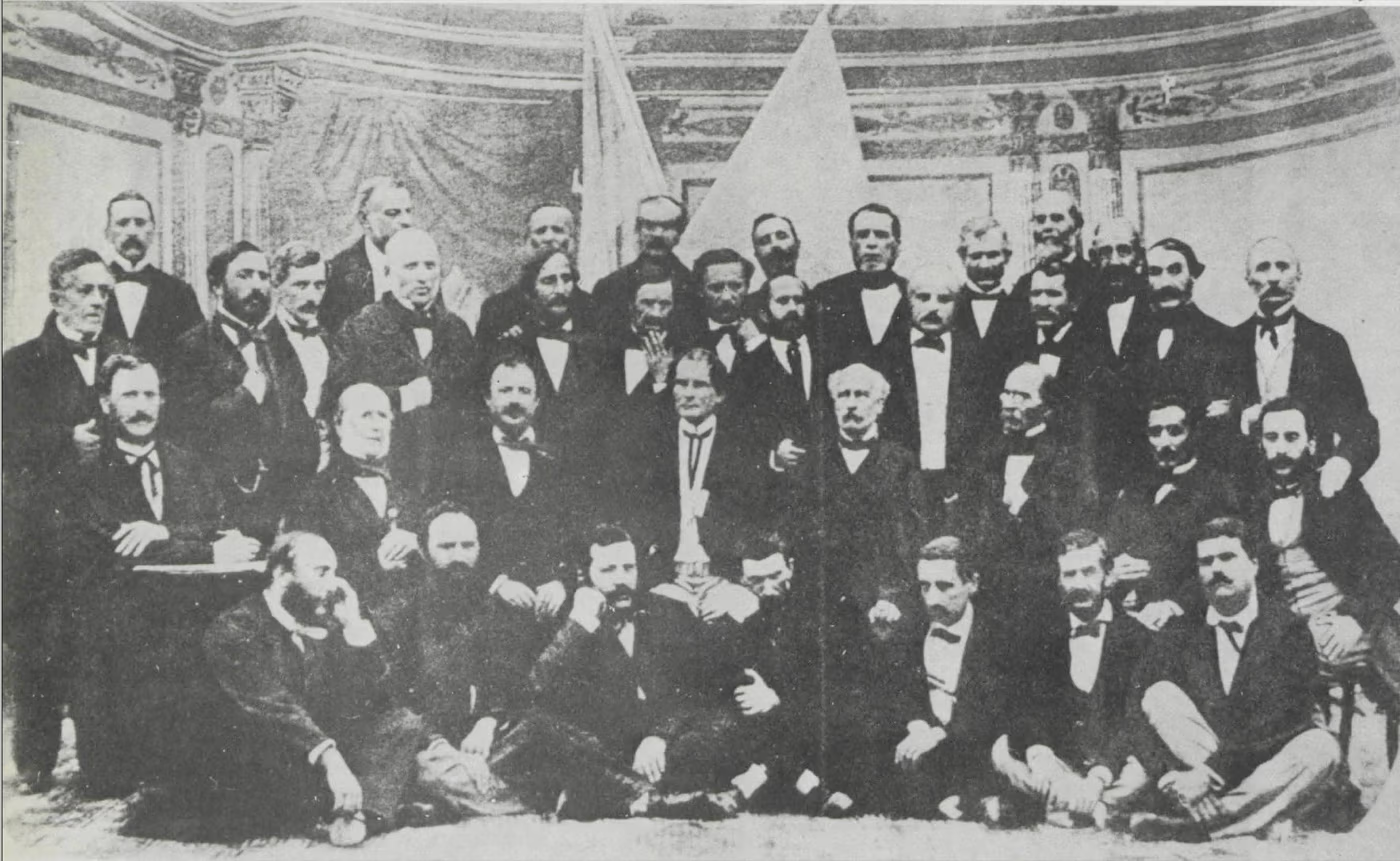
Union emerged through several recorded steps. A July 1863 treaty connected the proposal to the accession of George I and made it conditional on the Ionian Parliament’s wish and the assent of the other powers. The Ionian Assembly voted unanimously for union on 7 October 1863 in the Julian calendar, or 19 October Gregorian.
A five-power treaty followed on 14 November 1863. Britain, France, Russia and Greece concluded the final union treaty on 29 March 1864. Its language described Britain’s renunciation of the protectorate and recognition of union. That wording is more accurate than saying Britain transferred an uncontested title of ownership.
Why the handover has two dates
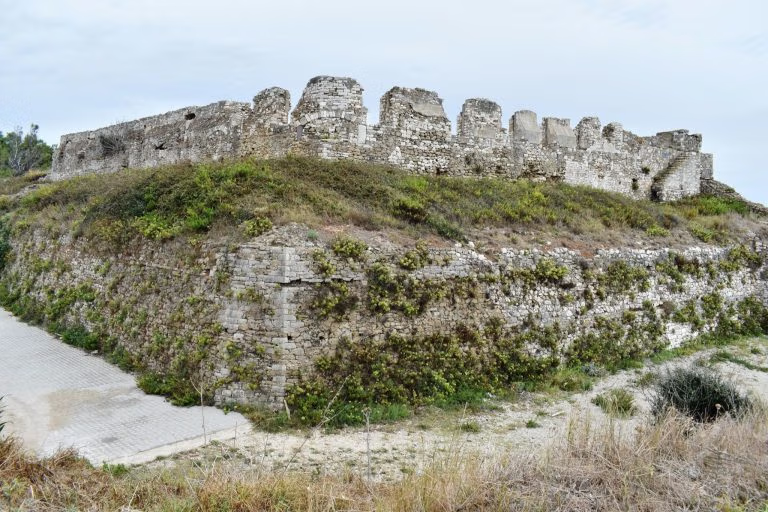
On Lefkada, the Greek flag was raised at Santa Maura on 21 May 1864. British-oriented records commonly give 2 June. Both refer to the same day because Greece and the islands were still using the Julian calendar. The twelve-day difference comes from the calendars and refers to one handover.
The final March 1864 arrangement limited perpetual neutrality to Corfu and Paxos with their dependencies. The Ionian Assembly decision was a parliamentary vote, not a popular referendum.
How to read the surviving state
Maps, arms, parliamentary rooms, treaty pages and photographs of representatives survive because the polity generated its own institutional record. They document local institutions; the constitutional record identifies the powers Britain retained.
Extended Read
For a related account of how Spyridon Zambelios interpreted Byzantium’s place in Greek history, continue with Zambelios and the Bridge to Byzantium.
Further Reading
- Treaty of Paris respecting the Ionian Islands, 1815
- Constitutional Charter of the United States of the Ionian Islands, 1817
- Hellenic Parliament Foundation: Ionian Parliament exhibition
- M. Paschalidi: British administration of the Ionian Islands
References
- Great Britain. Treaty of Paris respecting the Ionian Islands. Signed 5 November 1815; presented to Parliament in 1816.
- United States of the Ionian Islands. Constitutional Charter. Agreed 2 May 1817 and ratified by the Prince Regent 26 August 1817.
- UK Parliament. Debate on the conduct of Sir Thomas Maitland. 7 June 1821.
- UK Parliament. Debate on the Ionian Islands. 5 April 1852.
- Stavrinos, Miranda. “The Reformist Party in Ionian Islands, 1848–1852.” Balkan Studies.
- Paschalidi, Maria. British administration and political conflict in the Ionian Islands. UCL doctoral thesis.
- Gekas, Sakis. Xenocracy: State, Class, and Colonialism in the Ionian Islands, 1815–1864, introduction.
- Holland, Thomas Erskine. Treaty texts concerning the 1863–1864 union. In The European Concert in the Eastern Question, 1885.
- Hellenic Ministry of Culture. Santa Maura and the 21 May 1864 handover. 2024.
- Thomson, M. Map of the Ionian Isles, Albania, Thessaly, Macedonia and Greece. 1815. CC BY 4.0.
- Allan, John Harrison. Historical printed arms of the United States of the Ionian Islands. 1843. Public domain.
- Unknown photographer. Ionian Assembly representatives after the vote for union. 1863. Public domain.